Rust (Comic) Review
(review for www.mk1comics.co.nz website)
Rust vol 1: the Visitor in the Field (Hardcover)
MK1 Price: $45.90
Writer/Artist: Royden Lepp
Page Count: 192 pages
Self-Indulgent Walk Down Memory Lane That Will Wander All Over the Place and Eventually Connect to the Book I’m Reviewing Somehow… Honest*: (You can skip this part and go straight to the next heading if you are short of time or can’t be bothered with my rambling – I really won’t mind)
So yeah, back in the day, when I was living the Awesome (but broke) Student Life, I made it a bit Awesome-er and less broke by working part-time as Counter Guy at your favourite comic shop (I’ve mentioned this before). Anyway, back then Friday late night shopping was still a ‘thing’ and we used to have two Counter Jockeys rostered on to cope with the hordes of frenzied comic book junkies coming in for their weekly fix. One of my regular Friday night co-pilots was a guy called Christian Pearce.
I used to really enjoy those Fridays because Christian is one of the nicest people on the planet and in between batting away hungry comic book zombies with the latest copy of Uncanny X-Men, we would talk about Stuff. Important Stuff. Comics, sci-fi, martial arts, music, movies, religion, life…the whole ‘42’ (‘Hitchhikers Guide to the Galaxy’ reference for those of you too young to know). Christian is an artist and would occasionally bring in examples of the latest comic he was working on – usually quirky black and white strips completely over run with robots and Stuff that ‘Splodes. Christian eventually moved away to Wellington and ditched his mild mannered Comic Shop Guy alter ego to become “Super Ultra Awesome Weta Design Dude” (which I think is a better title than “Senior Concept Artist”) at the House that Peter Built and create Awesome Artworks of Awesome Awesomeness for some small indie pictures with obscure names like King Kong, Avatar, Chronicles of Narnia, District 9, Elysium, Tintin etc.
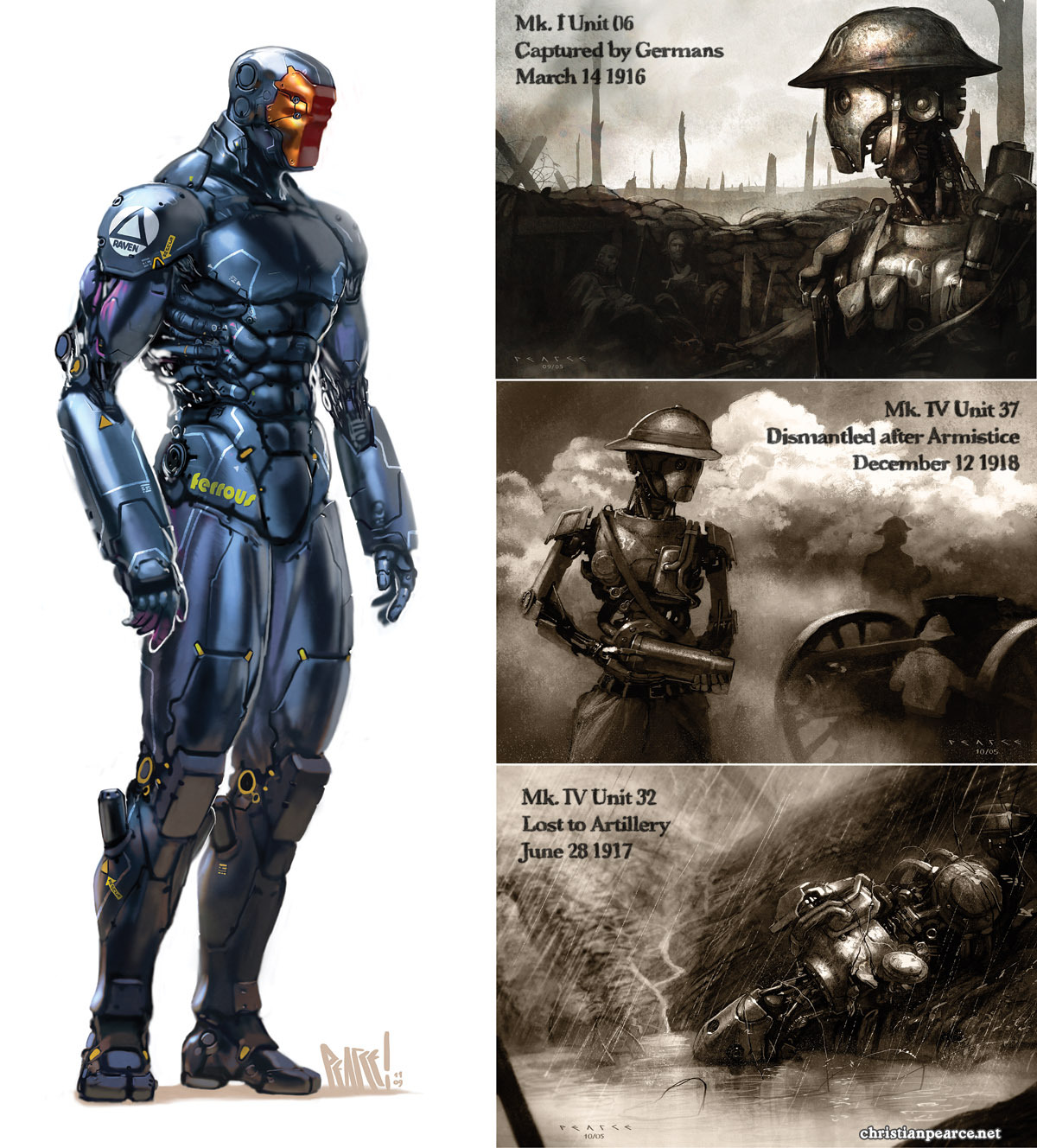
I’ve followed Christian’s work with interest over the years – ok, more like obsessively digitally stalked him over the internet (You too can join the fun! http://christianpearce.blogspot.co.nz/), which brings us (“Finally” you cry!) to the nexus. Given that this review is supposed to be about Royden Lepp’s fantabulously great comic book ‘Rust’, why am I going on about the equally fantabulously great (but apparently unrelated) Christian Pearce? Well, here it is: Christian has done a ton ‘o cool pictures over the years (including the cover of the latest issue of Faction – on MK1 shelves right now)but there was a series of them that featured robots in a WW1 setting that I have always loved in particular (http://payload16.cargocollective.com/1/5/190566/2629381/WW1Bot3PEARCE_1200.jpg). They’re images I’ve come back to many times and always wanted to know more about the parallel world that they inhabit. To my sequential art obsessed brain they have always looked like panels lifted from a comic and I’ve instinctively reached for the ‘before’ and ‘after’ panels that would give me the story behind them.
Having had a Great Grandfather (who was still around when I was a kid) who served in WW1 and a Grandfather who served in WW2, those periods have always been a source of great fascination for me personally. Neither Granddad or ‘Old Granddad’ spoke about their experiences very often, but there were occasional mentions and behaviours that made ‘the War’ a constant and mysterious presence that I was always aware of when I was with them. This (plus a steady diet of my uncle’s Commando comics when I was a wee fella) means that I’m hardwired to be a sucker for a well told story in those settings.
The Review (No, really)!
Every review I’ve seen for Rust references “the Rocketeer” and I get that. It’s an ‘all ages’ story set post-war and has a dude with a jet pack. For me though, the first panel I saw that showed WW2 looking soldiers fighting robots took me straight back to Christian’s pictures. I’m not suggesting that there’s been any influence from or awareness of that work at all – just a similar high concept and one that I like very much.
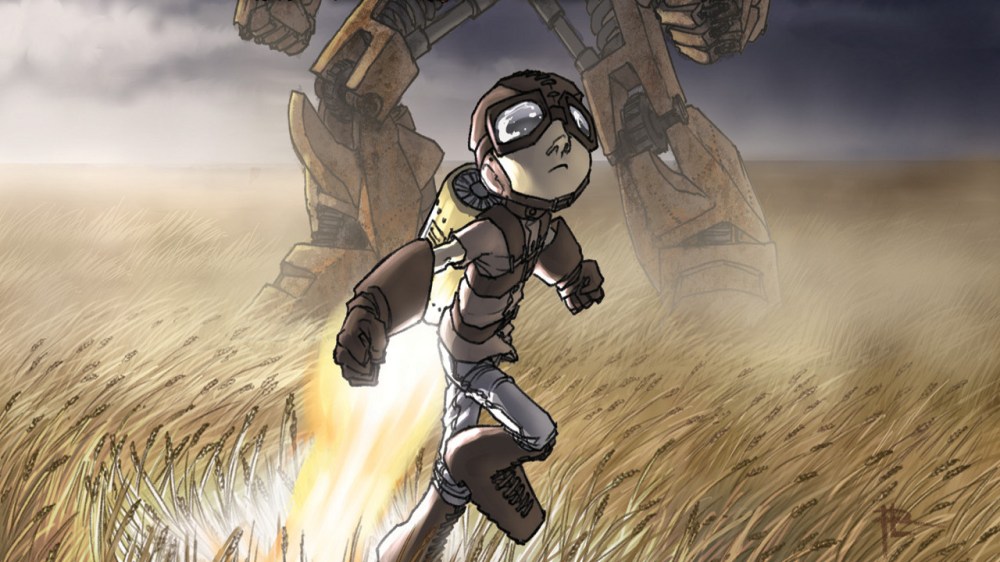
Vol 1 of Rust is essentially the tale of a jet packed mysterious stranger (Jet Jones) who literally crashes into the life of Roman Taylor, a young man struggling in the absence of his father to keep his family and their farm going in the aftermath of the aforementioned robot war. Action and adventure ensue. And there’s robots. And did I mention the Jet Pack?
As I’ve established over way too many words already (sorry Chris!…again) I am waaay pre-disposed to like the concept of this book, but a good concept alone does not turn 192 pages. Luckily Royden Lepp sure knows how to tell a story and I was ready for Vol. 2 the moment I reached the 192nd!
There’s action aplenty and a battle between Jet Jones, Roman, and a decommissioned Warbot in particular takes up a significant chunk of the book. This could be boring, but in Lepp’s capable hands the panels and pages fly by with perfect pacing. I’m a sucker for ‘cinematic’ storytelling in comic form and the name that I usually toss out as my high water mark for that is Jeff Smith but after reading this book I might have to change that name to Royden Lepp. It may be because of his background in animation, but reading Rust is like viewing storyboards for a blockbuster action film (and a great one at that). The flow from panel to panel is great, the action is well staged, and the art communicates the movement and impact of the battle in an exciting and engaging way. Someone obviously agrees because 20th Century Fox have bought the rights and a live action film directed by Joe Cornish (Adventures of Tintin, Hot Fuzz) is currently in production (can’t wait!).
So it looks great. Exciting action, cool robots, jet packs, expressive faces, moody sepia colour palate that perfectly fits the style and time period of the story – all present and accounted for. But beyond that, Rust is a book that has a lot of emotional depth and resonance. Roman’s quiet resignation about his lot in life – barely keeping his family and farm together, but determined to do the best he can – is shown through his painstakingly typed letters to his absent (Missing? Dead? ) Father. It’s hardly a new storytelling device but it’s used very effectively here as a window into what Roman is thinking and feeling. You really get the sense of the hole in Roman’s life where his Father should be and his constant awareness of it. The letters aren’t overused though; Lepp gets just as much mileage out of a well-drawn/placed facial expression when it comes to revealing character (something I always consider a litmus test for effective comic storytelling).
I also like the way that the war is treated. The impact that it’s had on Roman’s world is huge and obvious (decommissioned war bots working on farms and absent fathers are hardly things that you’d expect to go unnoticed), but he and most of those around him have little knowledge of the details of what actually transpired – and those that do know are reluctant to share (another point of connection with my wandering preamble, though in Roman’s world there the government appears to be actively working to ensure that those events remain shrouded in mystery). Fantastic things like Robot Wars are awesome but having characters that react in very ‘real’ ways to those events makes for compelling storytelling (and Rust is very compelling, indeed).
There are other mysteries in the book that slowly unfold (not too slowly, mind), and though not resolved in this volume, you get the sense Lepp will reveal all in time (as opposed to the ‘Lost’ method of just making it up as you go along and writing yourself into a corner – though I do still like me some ‘Lost’!). Jet Jones, in particular has a Very Big Secret and I’m intrigued and very keen to see how it plays out.
Finally, Just a quick word about the production values. If Archaia have ever put a book out that is not a complete and utter thing of beauty, I’ve yet to see it. Rust comes in a super high quality hard bound format with paper stock so thick I had to keep double checking the page numbers to make sure I hadn’t turned two at a time (I never had).
Cool concept. Great story telling. Beautiful art. Go and get it!
Recommended for:
- All ages
- Fans of the Rocketeer or Iron Giant
- People what likes robots (and really, who doesn’t?!)
- WW1/WW2 buffs
- Lovers of great comics (and aint we all!)
*Because, let’s face it, if you weren’t expecting this, you have obviously never read one of my reviews before (in which case – Welcome!)
 The Matsignal