Lantern City – Interview with Trevor Crafts and Matthew Daley
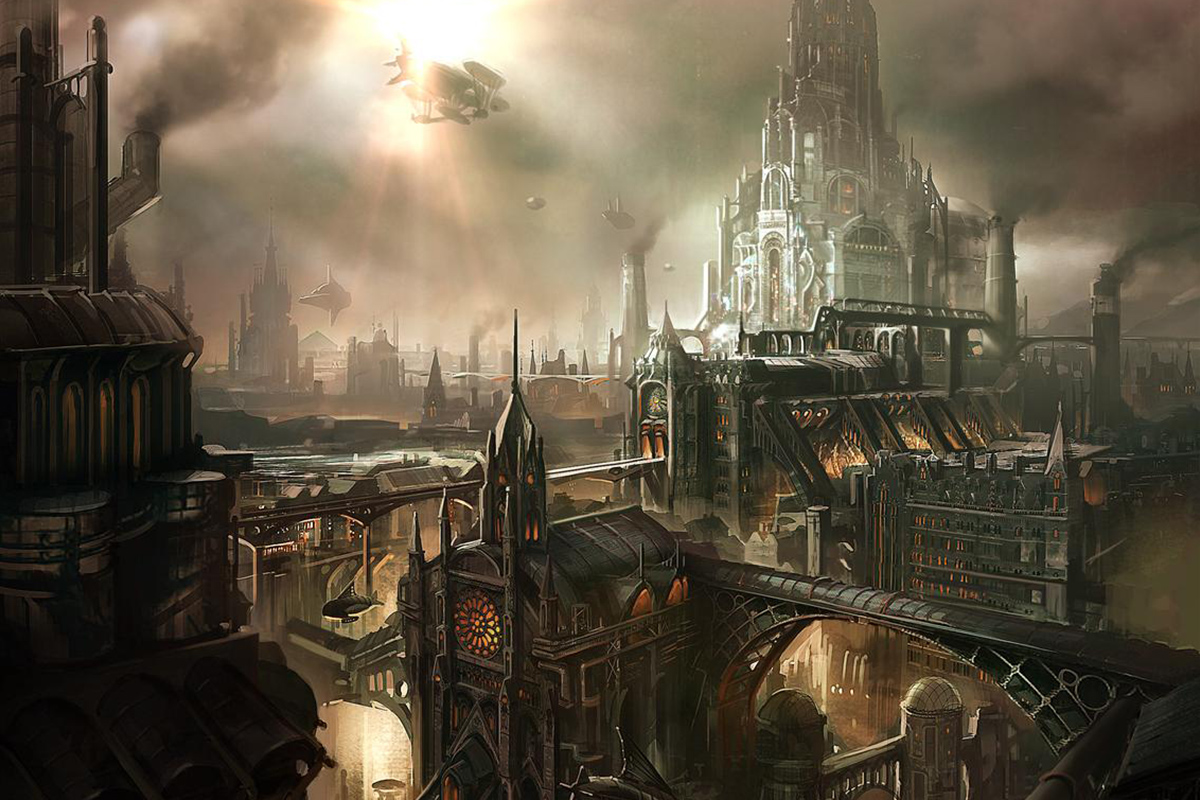
Interview for the Mark One Comics website back in 2016.

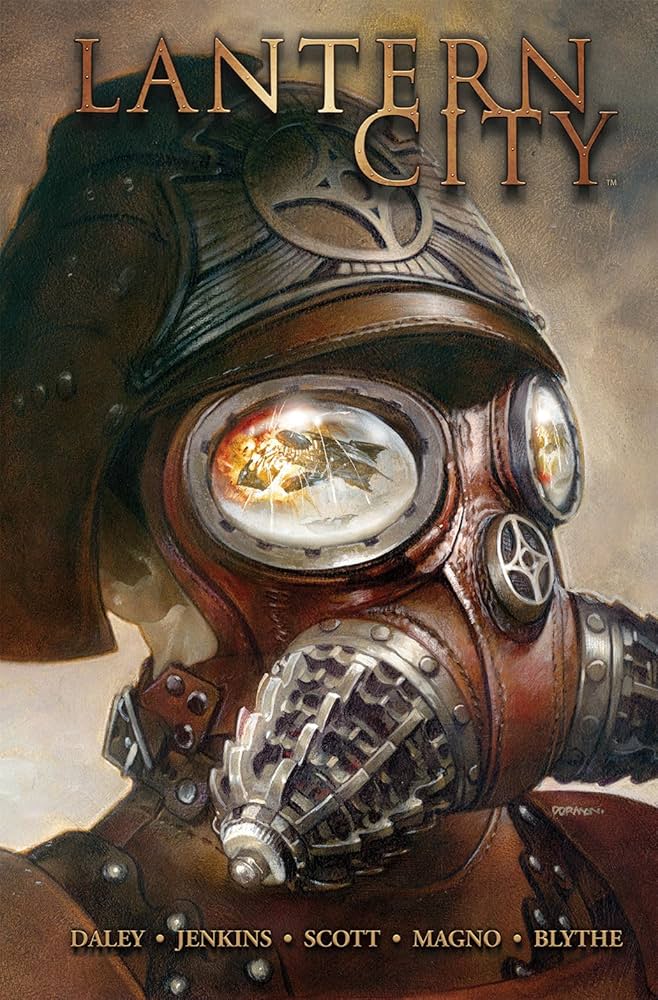
Some months ago I was occupying the new release station of my regular circuit around our favourite emporium of amusing board games and comical delights – when a cover tugged at the corner of my eye and politely requested the pleasure of its attention. “Lantern City” it said to my eye and my eye (joined by the other one – I actually have two) found its painted cover (featuring what appeared to be a Steampunk fireman in dynamic pose) to be most aesthetically pleasing. I also noticed the appellation of the esteemed Paul Jenkins’ name on the title credits which further encouraged a more thorough examination (Mr Jenkins is an author of graphic literature who has very seldom failed to provide fantastical enjoyment – in the humble opinion and experience of this writer). 

Hmmm…so maybe writing this preamble in faux Victorian style was one of those ideas that seemed so much better in my head than on my keyboard, but having set the scene the it’s fair to say that the combination of the catchy cover, Paul Jenkins, and my soft spot for the Steampunk genre (dating back to Joe Kelly and Chris Bachalo’s noughties beautiful, captivating, and utterly incomprehensible comic series of the same name) was enough to get me to give Lantern City a quick flick through (plus the fact that it’s an Archaia published title – if you’ve read any of my reviews you’ll know what my opinion is of those guys!). I was immediately blown away by the amazing art of Carlos Magno. Honestly, this dude is freakin awesome! His hyper-detailed rendering of Lantern City and its citizens is worth the price of admission by itself.

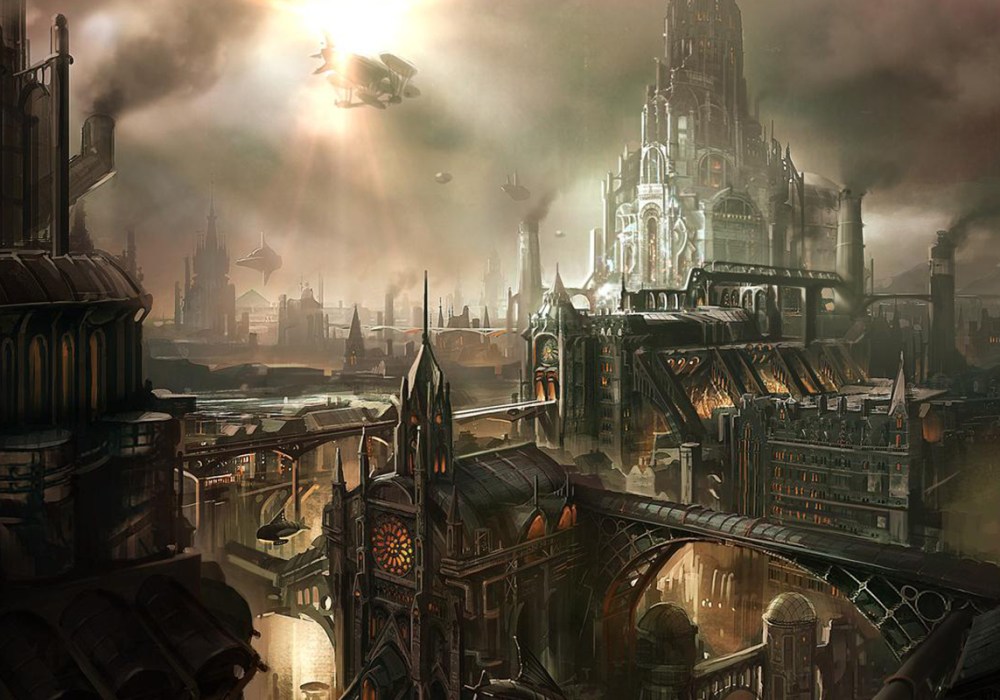
Lantern City is the sprawling steampunk setting for the tale of Sander Jorve, a poor member of the city’s lower class who is struggling to provide for his wife and son. The city presided over by the Grey dynasty and their harsh rule is enforced with extreme prejudice by the Guard (the aforementioned steampunk fireman looking guys). When a chain of circumstances puts Sander in the impossible position of having to assume the identity of a murdered Guard Captain, Very Dramatic Stuff and constant stress and jeopardy ensue.

Main series writer, Matthew Daley and his 1st issue co-writer Jenkins manage to introduce and create sympathy for the main characters within a few pages and quickly set up an intriguing dilemma with a cliffhanger ending and before I knew it, my casual leaf through had turned into a full reading of the whole issue (which I still bought, just in case anyone was wondering). 

This led to a seriously fun ride through the full 12 issue run of Lantern City (now available in Hard Cover right here at Mark 1). There’s some amazingly detailed world building here coupled with an engaging story with many unexpected twists and turns. A googleoogle led to the discovery that the setting and series was the brainchild of Trevor Crafts (in conjunction with Babylon 5/Tron actor Bruce Boxleitner) and the comic is just one spoke in a multi-media wheel that includes a novel (‘Rise’), a planned television series, and gaming projects. 

Interested to find out more about the genesis and future plans for this setting and its denizens, I contacted Trevor and Matthew to request an interview. I’d like to thank both of them and Ellen Scherer- Crafts (VP Production & Development, Macrocosm Entertainment) for their time and generosity in making this happen. For more information check out: https://lanterncitytv.com/ 
Trevor  Crafts

How  would  you  describe  Lantern  City  to  someone  who  has  never  read  the  comic  or  novel?  

Imagine  a  world  where  knowledge  is  restricted,  ancient  grinding  technology  surrounds  you  and  soot   fills  the  air.  You  are  ruled  by  the  oppressive  Grey  Empire,  but  you  have  one  chance  to  change  the   world  for  you  and  your  family.  How  far  are  you  willing  to  go  to  be  with  the  people  that  you  love  the   most?  How  much  could  you  change  to  survive?  This  is  Lantern  City®.  

I  read  that  you  first  started  developing  Lantern  City  after  seeing  some  steampunk  props  at  a   convention  –  what  was  it  about  the  steampunk  genre  that  got  the  wheels  turning  in  your  head?  

I  really  saw  this  amazing  imaginative  group  of  people  all  with  their  own  style  and  look.  The  costumes   and  props  that  they  had  designed  were  amazing.  Then  I  saw  the  legions  of  Stormtroopers  and  I   thought,  the  Steampunk  fans  needs  something  like  that  to  rally  around.      

I’m  always  interested  in  how  projects  progress  from  the  initial  kernel  of  an  idea  into  a  fully   realized  world  and  story  -­‐  can  you  tell  me  a  bit  about  how  the  idea  started  and  how  that  initial   conception  progressed  to  what  you  have  now?  

I  had  the  first  idea  on  a  plane  ride  from  NY  to  LA.  It  was  the  core  question  of  the  show  that  popped   into  my  head:  “How  far  would  you  be  willing  to  go  to  be  with  the  person  you  love  the  most?”   Everything  around  the  series  revolves  around  that  question.  I  wrote  furiously  on  that  flight  and  all  of   the  core  characters  and  the  Lantern  were  born.  My  vision  was  very  clear  and  I  have  tried  to  use  that   initial  creative  spark  as  my  compass  for  the  development  of  the  IP  over  the  last  5  years.  Everything  is   going  according  to  plan,  and  there  have  been  some  wonderful  surprises  along  the  way.  

How  did  Bruce  Boxleitner  become  involved  with  the  project  and  what  role  has  he  played?  

Bruce  and  I  met  in  the  Old  West!  Well  on  the  set  of  a  comedy  western  pilot  that  I  was  exec   producing  called  Smokewood,  Nevada.  We  hit  it  off  during  filming  and  I  obviously  knew  his  work  in   epic  series  and  world  builds,  like  Tron  and  Babylon  5.  I  wanted  someone  with  a  strong  SciFi   background  to  join  the  team.  So  I  shared  the  concept  with  him  and  all  of  the  development  I  had   done  and  we  started  honing  the  core  story  together.  Bruce  is  a  co-­‐creator  and  co-­‐executive  producer   of  the  show.  

At  what  point  did  Matthew  come  on  board  and  how  has  he  helped  flesh  out  your  ideas?  

I  had  been  producing  a  few  other  projects  and  one  of  my  DPs  Larry  Langton  introduced  me  to  his   college  roommate  Matt  Daley.  We  hit  it  off  immediately,  and  over  the  years  we  collaborated  on  a   few  projects  together  and  always  snuck  in  some  time  to  chat  about  movies  and  TV  shows.  When  the   opportunity  came  up  to  work  together  it  was  a  no  brainer.  Matt’s  brain  works  in  different  ways  than   normal  humans.  He  can’t  stop  coming  up  with  characters  and  stories,  He  is  one  of  the  key  reasons   Lantern  City  is  the  sprawling  steampunk  mega-­‐metropolis  that  it  is!  

How  interactive  is  the  development  process  between  the  3  of  you?  

Bruce  was  instrumental  in  the  beginning,  and  then  Matt  helped  to  build  it  out  big!  I’m  the  guy  that   makes  sure  everything  stays  aligned  to  the  core  vision  and  world.  

What  level  of  interaction  has  there  been  between  the  different  Lantern  City  parts?  What  I  mean  is,   how  has  Carlos  Magno’s  (amazing!)  art  on  the  comic  influenced  the  design  for  the  TV  series  and   vice  versa?  

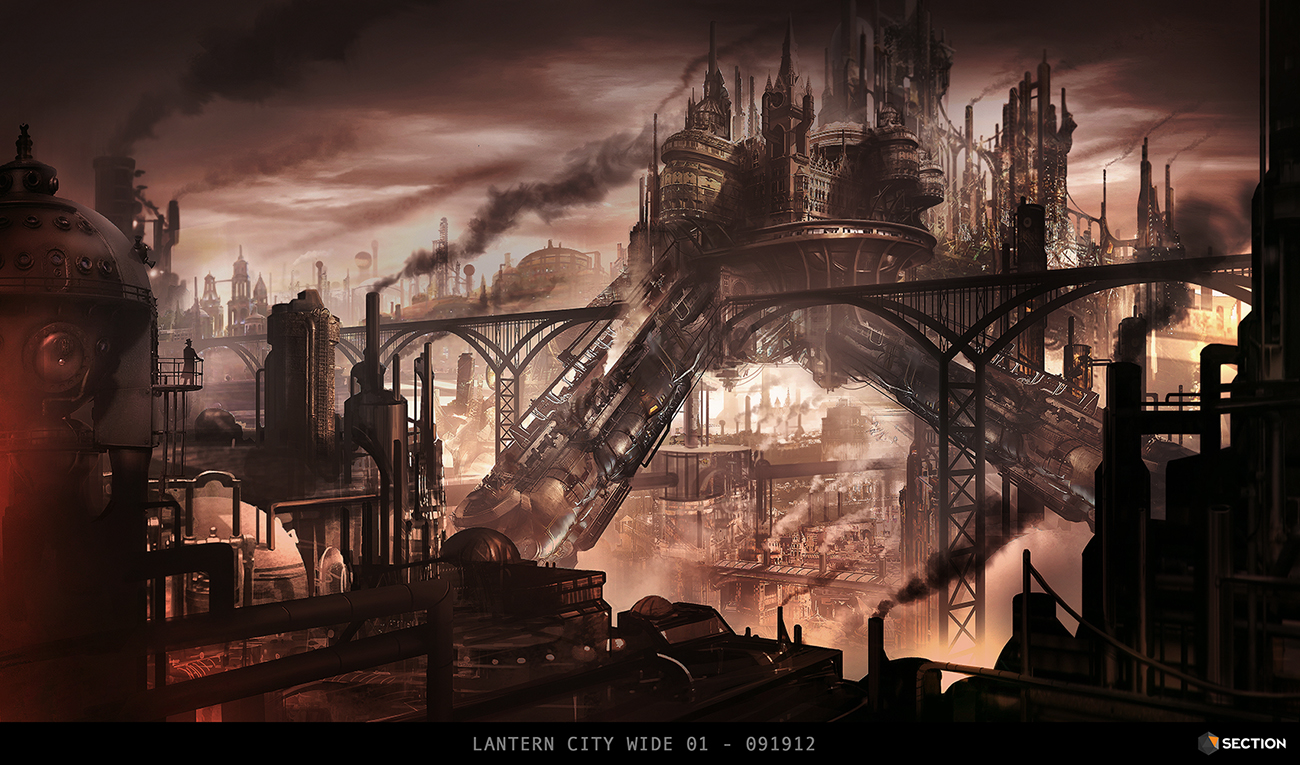
It’s  been  a  truly  great  process.  We  had  Section  Studios  create  the  initial  concept  art  for  the  series  so   we  gave  Carlos  a  great  foundation  to  build  on.  But  what  was  awesome  and  unexpected  was  how   much  of  a  training  ground  the  comic  proved  to  be  for  the  series.  With  an  unlimited  special  effects   budget  in  comics,  we  were  able  to  soar  to  the  heights  of  Lantern  City  and  delve  deep  into  the   underground.  We  could  really  feel  the  edges  of  the  space  and  know  what  we  could  and  couldn’t  do   when  it  came  time  to  start  shooting  the  show.  We  also  developed  some  great  new  Characters  that   will  now  appear  in  the  show  like  Lizel,  Kendal’s  daughter.  

You’ve  obviously  plotted  out  a  fair  chunk  of  the  history  of  Lantern  City  with  Rise  dealing  with  the   origins  of  the  Grey  dynasty  and  the  comic  set  many  years  later  –  how  detailed  an  outline  do  you   have  of  the  characters  and  events  and  over  what  sort  of  time  period?  

We  have  plotted  out  the  ruling  arc  of  the  Grey  Empire  dynasty,  from  the  Lantern  City  founder  Isaac   Foster  to  Alan  Hibbert  to  James  Jay  and  finally  the  current  young  ruler  Killian  Grey.  That’s  a  lot  of   history.  We  have  played  a  bit  in  each  generation  of  the  Empire  and  I  think  there  is  an  enormous   trove  of  stories  and  characters  in  each  one.  We  scratched  the  surface  of  the  earliest  history  with   Rise,  and  the  comic  and  TV  series  looks  at  the  current  time  in  Lantern  City,  but  there  is  a  lot  in   between  that  can  be  explored.  

  Is  the  TV  series  set  in  the  same  time  period  as  the  comic  or  is  it  in  the  earlier  period  described  in   ‘Rise’  (or  something  in  between)?  

The  TV  series  is  set  shortly  after  the  events  of  the  comic  series.  Sander  has  been  leading  the   underground  for  some  time,  and  Kendal  is  back  trying  hard  to  push  peaceful  revolution,  and  Killian  is   still  ruling  the  city  with  an  iron  fist,  but  the  story  really  twists  when  3  outsiders  from  our  world  fall   into  the  center  of  the  city  with  no  way  to  get  home.  It’s  a  great  juxtaposition  to  see  how  they  deal   with  this  very  alien  environment  and  how  they  change  to  survive.  

What  is  the  current  status  of  the  TV  series?  Is  it  still  going  ahead  or  is  it  in  development  hell?  

We  have  just  rewritten  the  pilot  and  got  some  good  news  recently,  so  things  are  moving  along   nicely.  

What’s  next  for  Lantern  City?  More  comics?  Novels?  TV?  Games?  

How  about  all  of  the  above!  We  have  created  a  great  maquette  of  the  Lantern  City  guard  that  will  be   available  very  shortly,  and  we  have  been  in  development  on  an  Augmented  Reality  board  game  as   well.  There  are  thousands  of  stories  to  tell  about  Lantern  City  and  Matt  Daley  just  won’t  stop   writing!  We  have  been  working  on  a  short  story  compellation  as  well  called  Tales  of  Lantern  City.  

Was  it  always  the  intention  to  tell  stories  across  multiple  media?  What  was  the  thinking  behind   that  decision?  

What  I  love  more  than  anything  else  is  building  worlds.  With  a  place  as  big  as  Lantern  City,  that  has   so  many  characters  and  corners  of  the  city  that  we  haven’t  even  seen  yet,  we  have  an  amazing   opportunity  to  utilize  not  only  different  media,  but  different  storytelling  styles.  You  can’t  tell  every   aspect  of  the  story  in  a  1-­‐hour  show  or  an  issue  of  a  comic,  but  with  multiple  formats  we  have  that   option.  It’s  very  important  for  us,  that  every  story  we  tell  is  additive.  We  don’t  want  anyone  to  do   any  homework  to  enjoy  Lantern  City.  You  can  pick  up  Rise,  or  watch  the  show  or  read  the  comic  or  

play  the  game  and  enjoy  them  on  their  own,  but  the  power  comes  in  when  they  are  combined  to  see   a  real  360  degree  view  of  the  amazing  Lantern  City.  
Matthew Daley

How  did  you  first  become  involved  in  Lantern  City?  

I became involved in Lantern City back in the spring of 2012. Trevor and Bruce were looking for a reliable writer that understood the world they were building and had a love of genres. It was a natural fit from the beginning.

What  appealed  to  you  about  the  project?  

There were a number of things that appealed to me about the project. First off, I knew immediately that Lantern City was going to be an enormous canvas and if I were a painter I’d be a muralist! I love that it has an historical feel to it. I studied History as an undergraduate student and loved the opportunity to create a fictional world with a deep sense of history. I was excited to develop characters to inhabit this world. All of the bells and whistles of world building are useless if you don’t populate that world with interesting characters. I liked being able to incorporate interesting socio- political elements into the world without ever reaching the level of preaching or teaching; there are realities to this world that contemporary readers will recognize as parallels to our world. Finally, I liked the idea that this was going to live in different mediums. I like working in multiple mediums and it’s always a pleasure to work different muscles in creating something that fits well for television vs. comic books vs. traditional novels and so on. This project would afford such an opportunity.

Are  you  pretty  much  able  to  go  in  any  direction  the  story  takes  you  or  is  there  a  project  ‘bible’  or   timeline  already  developed  that  you  need  to  stick  to?  

There is flexibility within this world, though there are rules and a history that must be respected. We’ve worked on a project bible since the beginning and while it has changed somewhat, the core is the same. An important thing to keep in mind while creating a world is to have rules that you stick to but that you aren’t restricted by those rules. That might sound contradictory, so I’ll use an example. George R. R. Martin has created a world in Game of Thrones where “nobody is safe” (i.e. any character can die). This means that readers/viewers are always on edge and there cannot be favorites. For him, he had to decide this from the first book and stick with it, meaning Ned Stark had to die, even though most series would follow his journey.

Carlos  Magno’s  art  is  incredible  –  how  did  you  guys  find  him?  

Carlos worked on two previous BOOM! Studios’ series and Trevor and I both loved his work. His level of detail is second-to-none. We made a wish list of artists to work with, which included Carlos, and fortunately for us, he was available. The series wouldn’t be the same without him.

Paul  Jenkins  was  credited  as  co-­‐author  on  the  first  issue  of  the  comic  but  not  on  any  of  the   subsequent  ones  –  was  he  always  just  going  to  be  on  board  for  the  first  or  did  something  happen?  

Since I had no previous comic book writing experience, it was determined from the get-go that I would co-author the first issue. Paul came on board and was incredible to work with. Essentially, he taught me how to write comics. He had an opportunity to write a different series and had to take it.

Had  you  written  any  comics  previously?  

No, though years ago I used to submit story ideas to both Marvel and DC when they had open submissions. I was naïve, for sure! I should have sought out artists and developed my own projects, but life is all about learning from mistakes.

What  do  you  enjoy  most  about  writing  for  comics  vs  writing  for  other  media?  

I love being forced to be economical. Most readers are drawn to the story and the art (though they’ll lean more toward the art) and a writer must put his/her ego in check because there’s a good chance someone cares less about your words than they do the artist’s work. A writer does have a great responsibility though, in shaping the story and developing the characters and making sure readers feel like they’ve gotten their money’s worth. Writing for comics is akin to writing/directing a film. You’re crafting the story and helping to determine the visual language of the story.

Writing comic books is also highly collaborative, whereas other creative arts don’t always lend themselves to such collaboration. It’s a true team effort and constantly rewarding.

Is  your  involvement  in  the  project  primarily  around  the  comic  books  (and  the  Rise  novel)  or  are   you  actively  involved  in  the  other  aspects  as  well?  

I am and have always been involved in all aspects of the project. It’s been an incredible journey and it’s important for me to contribute when necessary and step aside when need be.

Will  there  be  further  Lantern  City  comics?  

There are many unexplored phenomena in Lantern City…while there are no guarantees, there is no shortage of material.

Is  there  a  particular  character  or  part  of  the  Lantern  City  world  you’re  most  excited  to  develop   further?  

There is mention in Rise and the 12-part comic book series of The Last War, which was a sprawling war that nearly destroyed the world in which Lantern City takes place. I would love to write an epic Steampunk war series. That’s a dream series to develop.

As far as characters, I’m excited to incorporate characters from the comic book into other mediums. Most especially, Lizel and Terna. It will be a fun challenge to view the world of Lantern City from a woman’s perspective.

What  would  you  most  want  people  who  haven’t  read  the  comic  or  Rise  to  know  about  Lantern   City?  

That they’re missing out by not having read the comic book series and Rise! And that it is an intriguing world that continues to grow.
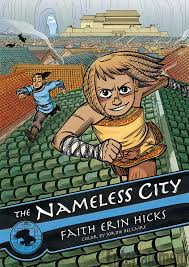
Faith Erin Hicks – Interview 2016 – The Nameless City

Here’s an interview I did with Faith Erin Hicks in 2016 about her background and specifically her awesome series “The Nameless City”. If you don’t know Faith from her own creator owned titles, you may well know her from her work on the Avatar: the Last Airbender sequel comics. You can find out more about Faith and her work on her website: https://www.faitherinhicks.com/

Kia Ora Faith – thanks heaps for agreeing to do this!

While it’s definitely changing, comics has long been a pretty male dominated field in terms of creators, content, and readership – how did you first become exposed to the medium?

I read comics as a kid. I was big into Tintin and Asterix comics, which are very popular in Canada (less so in the States). I also read newspaper comics, and when the internet finally became a thing, I was big into webcomics.

How did your taste evolve over time in terms of the types of comics you were reading?

I definitely started getting more picky about the kinds of stories I wanted to read. When I was younger I would just read anything in comic form. I remember I had a comic book version of the Bible that I loved. When I hit my late teens/early twenties, I really wanted more mature stories, and I especially  wanted stories where girls  and women were prominent. 

My readers will know because I’ve pointed it out before, but I was quite slow to come to the realization that the comic books I was reading were actually written and drawn by somebody and that there were certain somebodies whose work in enjoyed more than others – at what point did you make that realization and who were some of the creators that stood out to you?

I don’t really remember when I realized there was a person behind the comic book that I was reading. I remember having some knowledge of creators like Lynn Johnson and Bill Watterson. I guess the first creator I really latched on to was Jeff Smith, who created Bone. That was the first narrative comic that I was really into, and I really wanted to draw like him. I even started inking with a brush because Jeff Smith inked with a brush. 

When did creating comics become something that you thought you’d like to do yourself?

I started making comics when I was in my late teens, while I was in school. I did a webcomic for fun while I was in college. It was just a hobby, and I never thought I would be a good enough artist to be a professional. I was more interested in animation as a career. (I went to college for animation.)

Did you always draw and write or did one come before the other?

I definitely wrote before I drew. When I was in high school I was huge into prose writing. I had a whole list of ideas that I eventually wanted to turn into novels. I’d always drawn as well, but it was more of the “copy this photo” variety. I didn’t really do cartoon drawings, and I didn’t draw out of my head. I got into that later on, when I started making comics. 

At what point did you think you might be able to make a career out of this?

Well, it wasn’t really a choice, initially. I never intended for comics to be my fulltime job, and I remain astonished that I’ve been able to do it for so long. What happened was I was laid off from my job in the Canadian animation industry, and I couldn’t find work anywhere. I had this one freelance job drawing a graphic novel for First Second Books (it was called Brain Camp), and it paid enough money for me to live on for six months. So I decided to work fulltime on this one graphic novel, and at the end of the sixth months, hopefully I could find another job in animation. And that was eight years ago! I managed to get more jobs in comics, and never had to go back to animation. It’s pretty amazing that it worked out. I’m a lot happier in comics than I was in animation. 

You started out doing web comics – what are the pros and cons of working on something more episodic like a webcomic vs something more long form like Nameless City?

Working on a GN like Nameless City can be very isolating. It’s just me and my editor working on this giant project, and we had no idea if it would actually resonate with readers. With webcomics you’re sharing the comic as you work on it, so you have a chance to gauge your readers’ responses as the pages are posted online, which can be really cool. Or it can be awful, if the response isn’t what you hoped for. But I honestly prefer the graphic novel format, and I really like working with publishers. When you’re doing a webcomic, it’s usually just you doing everything, including marketing and publishing if you decide you want a collected hardcopy version of your webcomic. When I work with a publisher like First Second, they do all that stuff for me; all the marketing and distribution and promotion. I like that I can just focus on drawing comics and I don’t really have to do anything else. 

Moving on to ‘the Nameless City’ (which is awesome – by the way!)…

What was the original idea that sparked the project? How do these things usually coalesce creatively for you– do you start with the characters or the setting or the situation or all of the above?

The Nameless City had a pretty basic beginning: I wanted to write and draw a story about two kids from the opposite side of a complicated political conflict, and I wanted the setting to be “fantasy.” I wasn’t sure what the world would look like, or whether there would be magic, but I knew it wouldn’t be a realistic setting. I wanted to challenge myself as an artist. I’d just drawn two graphic novels with realistic high school settings (Friend with Boys and Nothing Can Possibly  Go Wrong), and I was really sick of drawing school lockers. I wanted a setting that was very different. 

How would you describe it to someone who has never read the book?

My elevator pitch is: two kids meet in a City that has been conquered repeatedly. One kid is a member of the ruling elite, the other is a street kid orphaned by conflict. They form a combative friendship and end up entangled in a conspiracy and assassination plot. Or I just say it’s kind of like Avatar: The Last Airbender, but without the magical bending. 

The ancient China-esque setting is quite different from the more modern day/school settings of some of your other work – what attracted you to that place and time?

I had read a couple of nonfiction books about the Yuan Dynasty, so it was a time period that interested me. By all accounts it was a complicated time of great upheaval, and some of the historical events mirrored the themes of conquest and occupation that I wanted to explore. I also wanted to stay away from European history inspired fantasy which seems to dominate the genre. 

You’ve got this intriguing, incredibly realized setting with cool martial arts and free running but at its heart it’s the story of Kai and Rat and how they develop their friendship – is that the crux of the series or will there be other points of view in the coming volumes.

Kai and Rat’s friendship is definitely the backbone of the comic, although there are different themes and points of view that I explore later on. There are characters whose points of view I think are very sympathetic, but they also make bad decisions with terrible consequences.

Despite them coming from opposite sides of the tracks they seem to share their sense of loneliness and not fitting into their respective worlds – is that kind of the point of the story? 

I think Rat fits into her world fine, she’s just suffered under the system she’s forced to live under, because she’s seen as less than human by some of the enforcers of that system. Kai, by contrast has been born with a lot of privilege, but he starts to see the injustices that exist in the system that gives him that privilege. So it’s more about these two coming together to hopefully affect the world they live in. 

You do a great job of translating the kinetics of the martial arts and free running scenes into static panels – did you have any particular influences in figuring out your approach or is it just something that came naturally?

Haha, nothing about drawing comes naturally to me! I looked a lot of different comic books and stole from the best. Manga like Fullmetal Alchemist or Naruto do action really well, so those were big influences. There are a couple North American artists who do action and running really well; James Harren is great at that kind of stuff. 

There’s obviously some Manga influence in your use of speed lines and some of your facial expressions – where does that come from? 

My biggest influence is probably Hiromu Arakawa, who wrote and drew Fullmetal Alchemist. I love her. I also really like Naoki Urasawa, although he’s not known for his action. 

I found it interesting that you had cover quotes from Bryan Konietzko (co-creator of Avatar: the last Airbender) and Jeff Smith because the setting of Nameless City and the age of the characters reminded me of the former and there were elements of your art and the vibe of the book that kind of reminded me of Bone – were either of those influences?

Yes, both Avatar and Bone were big influences, and I’m thrilled Jeff and Bryan blurbed the book! They’re both my art heroes and it was wonderful they had kind words for me. I initially pitched Nameless City to my publisher by saying that I wanted to do a comic like Bone. It’s still one of my favourite books of all time. 

Although there are martial arts scenes in the book (Mura is pretty bad ass!) – Rat and Kai’s skills are more in their parkour style travel through the Nameless city – was it a conscious choice to have the story’s main heroes have strengths other than fighting? Even with Mura – she’s the most skilled martial artist we encounter in the book which goes against the normal gender stereotypes you’d find in a story with this type of setting – were you deliberately playing with expectations there as well?

Yes, absolutely. It was a very deliberate choice for Kai to be bad at fighting, and for him to be kind of repulsed by the violence in his society. I love action and adventure as a genre, but often times I don’t find it to be very thoughtful about how it portrays violence. I wanted to make an action comic, but have the action come out of characters running and jumping as they explored the City, not hand to hand combat. As for gender stereotypes, it’s always my goal to mess with them, because they’re mostly nonsense. Mura is a character I’ve wanted to write for a long time, and I love where her story goes. 

There seems to be potential for things to move in a more fantasy direction as we find out more about the mysterious Northern People/First Builders – will we see more of these elements in the future volumes?

Yes, there are many mysteries about the City that are still to be unraveled. I won’t say any more for fear of spoilers. 😉

Do you plot or script things out in detail before you start drawing or do you write as you go? 

I always thumbnail and script the entire book before starting in on a new graphic novel. My editor needs to see my process to give me notes, so it all has to be done before hand. The Nameless City is my eleventh published book, so at this point my method of working is pretty regimented. I sound boring when I actually go through the steps of making a graphic novel, but I feel like planning things out ahead of time and going through the story with your editor will result in a better comic than if you’re just winging it. Although some days I wish I could just wing it … 

How do Faith the writer and Faith the artist work together? Does the story ever demand things that as an artist you’d prefer not to draw?

Well, I inked a million rooftops the other day, that was kind of rough. But for the most part, if I’m writing a story that I know I’m going to draw, I pick the kind of story I know I’ll enjoy drawing. So, no comics with a million cars in them. I hate drawing cars. 

Without spoiling anything too much, can you give us any hints about where the story is going in the upcoming sequel (the Stone Heart)?

Different forces are pushing the Nameless City down a dangerous road, and Kai and Rat are stuck in the middle, trying to prevent the City from plunging into war. We will also see Kai play a musical instrument, which was super fun to draw. 

Thanks so much for agreeing to do this, we love your book here at Mark One and are really looking forward to the rest of the series.

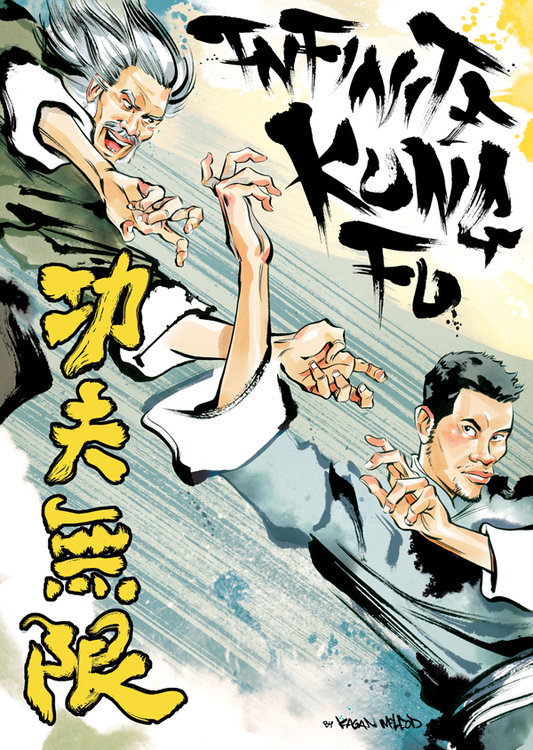
REVIEW: Infinite Kung Fu

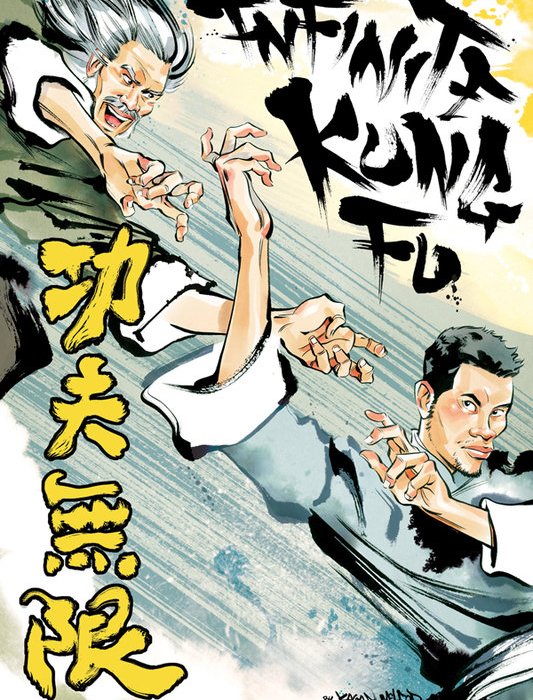
infinite_kungfu_cover_sm_lg

I love this book. Really, really love it. I love it so much that I don’t think I can explain how much or why without waxing long and lyrical. For those for whom long and lyrical waxing is a turn off here’s my ‘cover quote’ review:


If you took the best elements of every martial arts movie ever made, added an oh so cool splash of blaxpoitation, mixed in a hoard of zombies, and added some of the best art in comic books – you probably still wouldn’t be able to cook up a dish as scintillating to your fanboy palate as Kagen McLeod has created with “Infinite Kung Fu”.  Buy it now or tear up your comic book geek membership card forever!


Still too long? How about:


The art is visceral, kinetic, and intensely cinematic. McLeod has, perhaps more than any before, truly translated the power and beauty of the martial arts onto the drawn page. He’s a Grand Master of sequential art.


No?


Hits harder than a ‘Buddha Palm’ to the gonads!


Or for you real ADHDers:


It rules! Buy it!


Now, if you’re still reading this and not already at MK1 hitting Chris up for a copy of this fantastic tome, I’ll assume you like to get right down to the actual factual before parting with your hard earned dollars. You like to get both the nitty and the gritty before making a decision. Ok, I respect that, but don’t say I didn’t warn you!

.

I hate to admit it, but I’m old enough to remember David Carradine’s “Kung Fu” series being on the tele. Well actually, its probably more accurate to say that I have vivid recollections of seeing the oh-so-enticing ads for said series since my Mum had been to teachers college and had become totally militant in enforcing her ideas about bedtimes and not exposing my young mind to anything remotely (in her view) violent or (in my view) cool. Kung Fu came on at exactly my bedtime so the full extent of my viewing was the aforementioned trailers (usually a profound sounding snippet of conversation between the young “grasshopper” and his blind Shaolin Master, followed by some cool action scene of the adult Kwai Chang Caine kicking some bad dude in the head) and if I could manage to reeeeeeally prolong the pre-bedtime ritual putting on of pajamas and brushing of teeth – the first scene and opening credits of the show proper. This would be followed the next day by having to see and hear the endless re-enactments by my friends who all were allowed to watch the whole thing.


In my young mind, Kung Fu became the epitome of Forbidden Coolness and Bad Assery, a conclusion that was finally confirmed when my Uncle assumed baby sitting duties on the nights it was on.  Due to his less than rigid adherence to my Mum’s Commandments of TV and Bedtime I was finally able to experience the programme in its fullness. Young Matman was not disappointed.


Although it might seem a bit hokey and slow when viewed all these years later, at the time it was totally unlike anything else on tv. The idea of this mysterious fighting art from China that enabled its proponents to become unbeatable while also gaining hidden wisdom was captivating to my younger (short, skinny, and already a bit nerdy) self.


Fast forward a few years to my 12th birthday when (after years of endless pestering) my Mum finally agreed that I was old enough to watch a Bruce Lee video. It was Fist of Fury (aka the Chinese Connection) and I can remember being as enthralled by the magnetic charisma of Lee as I was amazed by the speed and dynamism of his movements. I watched it twice in a row, fell asleep, woke up and watched it twice more the next day. After that I quickly sought out “The Big Boss”, “Way of the Dragon”, “Game of Death” and “Enter the Dragon”. Having run out of Bruce Lee films to watch I exhausted the Martial Arts section of the local video shop, leading over the years to the discovery of Jackie Chan’s Kung Fu comedy and amazing stunts; the Shaw Brothers films (directed by the great Chang Cheh and Lau Kar-Leung) with exotic titles like “5 Deadly Venoms”. “36th Chamber of Shaolin”; Tsui Hark and his “Once upon a time in China” series;  to movies featuring actors like Sammo Hung, Gordon Liu, Jet Li, Donnie Yen; and to mysterious and alluring sounding techniques like the ‘Buddha Palm’, and ‘No Shadow Kick’.  The movies had implausible storylines that often relied on outrageous coincidences or launched off on weird tangents, terrible voice dubbing (and/or poorly translated subtitles), and cheap production values – but still had a magnetic pull on me.


I think the source of is that pull is that, at their core, martial arts movies are stories about people achieving the great and the unbelievable through hard work (the literal meaning of Kung Fu), discipline, and self mastery. No radio-active spiders, chemistry set accidents, or powers bestowed by powerful beings from another planet – the Kung Fu hero achieves his power by passing through great trials, making great sacrifices, and exerting great effort. They’re stories that at their heart speak to the power of human potential. You could easily argue that Batman or Daredevil are essentially Kung Fu movie men in tights (which is probably why those 2 are 2 of my my favourite super-heroes…the Kung Fu thing that is, not the tights).


This fascinating voyage through the life of Matman is mainly to point out that I was completely hardwired to either lurve or detest Infinite Kung Fu. if I, as a funny book reading, martial arts movie watching, Bruce Lee imitating fool, am not the target market for this, then it’s hard to think of who is. There have been plenty of crappy comics written/drawn by those with only a passing interest in/knowledge of the genre and if guys like me (believe it or not there are others) don’t buy it (conceptually and financially) then the book it would be hard to imagine that it would find a place in the market. Well, that’s what I thought when I first picked it up anyway. What I found is a book that has much wider appeal than to just the funny book reading, martial arts movie watching, Bruce Lee imitating fools of the world.


It’s obvious from every pencil and brush stroke on every panel of every page of Infinite Kung Fu that Kagen McLeod ‘gets’ what makes the genre work. The book is a 464 love letter to Kung Fu movies that not only references and pays tribute, but joins them in using the classic tropes (plus Moog Joogular: the coolest black man never to appear in a blaxpoitation flick, and the aforementioned zombie hoards) to tell a great story. The book is a tour de force that, perhaps more than any other comic I’ve read, captures the kinetic beauty of martial arts in sequential art (yeah, I know I already said that, but its true and worth repeating).


Although stylistically very different, the art in IKF makes me think of Jeff Smith’s work on Bone in that there’s a lot more happening that you will ever pick up on a casual flick through. Actually if you don’t give yourself some serious time to sit down and really absorb all of the detail you are robbing yourself of much of the coolness. The book is in black and white which isn’t everyone’s cup of tea but to be honest, I think that the addition of colour would actually detract from the experience – like adding colour to Frank Miller’s Sin City.


Storywise, the elements are all there. Grand Masters with mysterious powers, deceitful disciples/evil villains who use forbidden techniques, a young hero who has to overcome adversity and train hard to ultimately conquer, hot Kung Fu babes, magic, zombies, and my favourite – Moog Joogular:  the coolest black man never to appear in a blaxpoitation flick. The writing is low key and doesn’t stand out in an Alan Moore sort of way but it fits with the art to create the IKF gestalt of awesomeness.


This really is the most fun I’ve had reading a comic book in a long time (and I have a lot of fun reading comic books) and I can’t wait to see what Kagen McLeod does next (Hopefully it’s something with Moog Joogular:  the coolest black man never to appear in a blaxpoitation flick)


Recommended for:

  • Anyone who has ever enjoyed a Bruce Lee/Jackie Chan/Shaw Bros/Jet Li/Donnie Yen film.
  • Anyone who thinks that Shaft is the epitome of coolness and that ‘Sho Nuff’ was the best character in “the Last Dragon”
  • Zombie fans.
  • People who like fantastic art.
  • Ah, to hell with it – everybody! (though given the amount of entrails and detached body parts that fly across the pages, maybe not the Young and the Squeamish)


Kagan McLeod (Writer/Artist of ‘Infinite Kung Fu’) Interview


Can you tell me about the Genesis of Infinite Kung Fu as a book – how did it develop?

As soon as I discovered old school martial arts movies in college it kind of took over my artwork. Even if I had to do a school project on the anatomy of the hand I would work in a moustachioed, badly igged kung fu master to demonstrate the said hand anatomy. I started toying with story ideas around ’99 and self published the first few pages of what would become the graphic novel in 2000. I did about 200 pages on my own before teaming up with Top Shelf to finish the story.

Your love of Kung Fu/Wuxia films is obvious – how did you first get into them and what is it about them that you enjoy so much?

I’m sure it had a lot to do with Wu-Tang’s first album in ’93. After that I started buying bootleg VHS tapes through my local video store guy Colin Geddes, who wrote the forward for the book. The thrill of the hunt was a huge part of it. Finding something really obscure and weird that nobody else knew about was a blast. It’s so easy now online to get whatever you want instantly, that it’s hard to appreciate a clunky VHS tape you waited 8 weeks for with only one good ninja death.
I’ve always had a sore spot for so-bad-it’s-good material, and there’s a lot of that in martial arts movies. But for the higher quality films, obviously the choreography is impressive but I’m drawn to the ideas behind the fights. The characters are superheroes, but not mutants or aliens — just guys who became really powerful through hard work. The training is often just as exciting as the final fight.

Do you have any particular favourite films or actors?

Gordon Liu is a favourite so I was amazed to have him write a blurb for the introduction. I love his ‘monk’ movies — The 36 Chambers of Shaolin, Eight Diagram Pole Fighter. Master of the Flying Guillotine is great, and Shaolin Executioner. I also love the 6 Lone Wolf and Cub films and the whole kung fu subgenre of Black Magic horror movies, like Boxer’s Omen, Black Magic (1 and 2) and Black Magic with Buddha.

Have you ever trained in martial arts yourself?

Nope!

Gordon Liu wrote the foreword for the Infinite Kung Fu collected edition – how did that come about?

Colin Geddes, who I had mentioned above, works for the Toronto International Film Festival and is very connected to a lot of film people. At some point Gordon was in Toronto for a few screenings of some of his films, and Colin couldn’t make it to an Dim Sum with him arranged by the Hong Kong Trade Office. He graciously gave me his spot, and even being the only non-cantonese speaking gweilo in the room I still managed to snag the seat next to Mr. Liu. He’s a great guy, and I put the bug in his ear about the foreward then. Another friend, King Wei Chu of the Montreal Fantasia Festival, helped me get in touch with Gordon later on.

Although the book for the most part stays completely within the conventions of a traditional Kung Fu/Wuxia tale, you’ve also got elements of 70s blaxpoitation and of course zombies in there as well – what are the influences there?

I guess all of those subgenres fit under the “grindhouse” umbrella. Tonnes of movies from each of those genres were being made in the ’70s, so it wouldn’t be a stretch to see them packaged together as a double bill. They all have a similar vibe that I was drawn to; low budgets without much flashy special effects, funky music, real stunts. Honestly, zombies are just fun to draw so that was the reason for working them into the story. There’s so much zombie stuff out there now that I’m almost embarrassed my book has that element, but I guess it is what it is.

In keeping with the blaxpoitation elements, there’s a bit of a tip of the hat to Curtis Mayfield/Isaac Hayes style funksters in Infinite Kung Fu and nowdays, of course, the Wu Tang Clan and other hip hop artists are also associated with the Kung Fu genre – what was the soundtrack in your head as you were writing and drawing?

Right, some of Moog Joogular’s looks are based on George Clinton and Isaac Hayes. I grew up listening to ’80s and ’90s hip hop and later started to get into the music sampled by those artists. If I could recommend a few tracks to check out they might be:
1. Billy Jack by Curtis Mayfield
2. T Plays It Cool by Marvin Gaye
3. Electricty by Allen Toussaint
4. Woman of the Ghetto by Marlena Shaw
5. If I’m In Luck I Might Get Picked Up by Betty Davis
6. The Gym Fight by the Blackbyrds

Your art style is very distinctive – kind of a mixture of traditional asian ink and brush with street art/graffiti sensibilities – who or what are you main influences??

I grew up drawing from Mad magazines, copying Mort Drucker and Jack Davis art. But I do love traditional Chinese drawing and golden age illustration, which is basically anything from the late 1800s up until the ‘70s.

As an artist, how hard is it to capture the dynamic movement of martial arts in a static medium?

I found it was easier than you might think. The films have a very rhythmic quality to them, the fights anyway. Pacing kung fu moves panel to panel seems to echo that, in a way. I definitely didn’t want to try to recreate a movie in comic book form, but to suggest the flavour of the genre.

Brushes and inks seem to be your preferred medium but your pencil work in Moog’s flashback scenes was also awesome! Will we see more of this in any future work?

Sure, I’m not opposed to it. I quite like playing with line widths though and don’t do it enough (it’s easier to use the same brush for a whole drawing). If the project calls for a specific style I can try something different. I definitely wanted the flashbacks to stand apart from the main story in case things got confusing.

As both writer and artist on the title, what’s your process? Do you script it out fully beforehand or do you just have a rough outline and script it out once the art is done?

Scripting beforehand really helps me, at least chapter to chapter. I like to write without pages in mind, then go through the script and draw lines where the page breaks should be. After that I’ll figure out how many panels it will take to illustrate the page.

You’re obviously really busy with your illustration work for magazines – will we see more comics work from you in the future?

I find it hard to say no to assignments but really, all I think about is doing comics.

More Infinite Kung Fu or something else?

Something else, I hope to avoid being pigeonholed as just a kung fu guy. Details early in the spring.

Finally, how would you describe Infinite Kung Fu to someone who’d never read it before?

Martial masters working to re-achieve the ‘great balance’ after Buddhist reincarnation has gone awry, in an epic fantasy reflecting ’70s kung fu films in tone!


Rust (Comic) Review

rust

(review for www.mk1comics.co.nz website)

Rust vol 1: the Visitor in the Field (Hardcover)

MK1 Price: $45.90

Writer/Artist: Royden Lepp

Page Count: 192 pages

Self-Indulgent Walk Down Memory Lane That Will Wander All Over the Place and Eventually Connect to the Book I’m Reviewing Somehow… Honest*: (You can skip this part and go straight to the next heading if you are short of time or can’t be bothered with my rambling – I really won’t mind)

So yeah, back in the day, when I was living the Awesome (but broke) Student Life, I made it a bit Awesome-er  and less broke by working part-time as Counter Guy at your favourite comic shop (I’ve mentioned this before). Anyway, back then Friday late night shopping was still a ‘thing’ and we used to have two Counter Jockeys rostered  on to cope with the hordes of frenzied comic book junkies coming in for their weekly fix.  One of my regular Friday night co-pilots was a guy called Christian Pearce.

I used to really enjoy those Fridays because Christian is one of the nicest people on the planet and in between batting away hungry comic book zombies with the latest copy of Uncanny X-Men, we would talk about Stuff. Important Stuff. Comics, sci-fi, martial arts, music, movies, religion, life…the whole ‘42’ (‘Hitchhikers Guide to the Galaxy’ reference for those of you too young to know). Christian is an artist and would occasionally bring in examples of the latest comic he was working on – usually quirky black and white strips completely over run with robots and Stuff that ‘Splodes. Christian eventually moved away to Wellington and ditched his mild mannered Comic Shop Guy alter ego to become “Super Ultra Awesome Weta Design Dude” (which I think is a better title than “Senior Concept Artist”) at the House that Peter Built and create Awesome Artworks of Awesome Awesomeness for some small indie pictures with obscure names like King Kong, Avatar, Chronicles of Narnia, District 9, Elysium, Tintin etc.

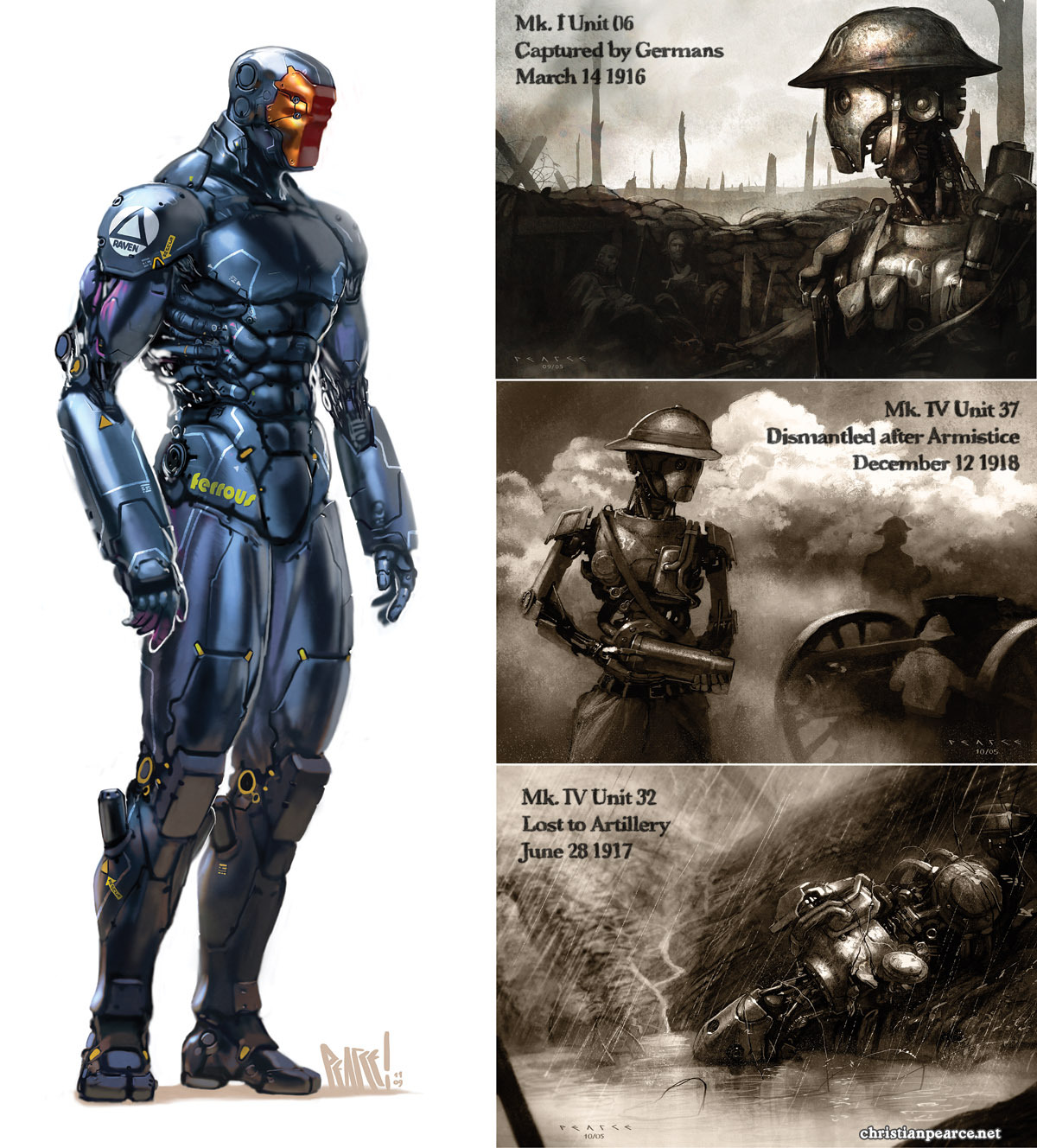
I’ve followed Christian’s work with interest over the years  – ok, more like obsessively digitally stalked him over the internet (You too can join the fun!  http://christianpearce.blogspot.co.nz/), which brings us (“Finally” you cry!) to the nexus. Given that this review is supposed to be about Royden Lepp’s fantabulously great comic book ‘Rust’, why am I going on about the equally fantabulously great (but apparently unrelated) Christian Pearce? Well, here it is: Christian has done a ton ‘o cool pictures over the years (including the cover of the latest issue of Faction – on MK1 shelves right now)but there was a series of them that featured robots in a WW1 setting that I have always loved in particular (http://payload16.cargocollective.com/1/5/190566/2629381/WW1Bot3PEARCE_1200.jpg). They’re images I’ve come back to many times and always wanted to know more about the parallel world that they inhabit. To my sequential art obsessed brain they have always looked like panels lifted from a comic and I’ve instinctively reached for the ‘before’ and ‘after’ panels that would give me the story behind them.

Having had a Great Grandfather (who was still around when I was a kid) who served in WW1 and a Grandfather who served in WW2, those periods have always been a source of great fascination for me personally. Neither Granddad or ‘Old Granddad’ spoke about their experiences very often, but there were occasional mentions and behaviours that made ‘the War’ a constant and mysterious presence that I was always aware of when I was with them.  This (plus a steady diet of my uncle’s Commando comics when I was a wee fella) means that I’m hardwired to be a sucker for a well told story in those settings.

The Review (No, really)!

Every review I’ve seen for Rust references “the Rocketeer” and I get that. It’s an ‘all ages’ story set post-war and has a dude with a jet pack. For me though, the first panel I saw that showed WW2 looking soldiers fighting robots took me straight back to Christian’s pictures. I’m not suggesting that there’s been any influence from or awareness of that work at all – just a similar high concept and one that I like very much.

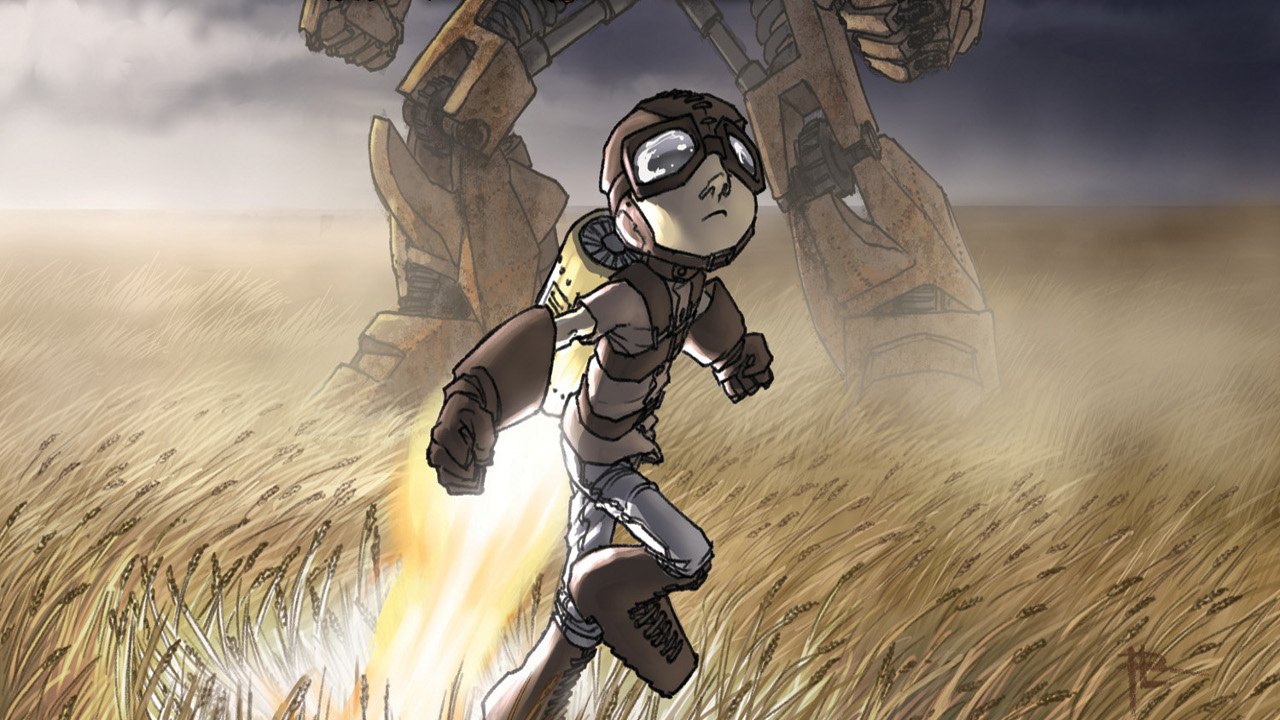
Vol 1 of Rust is essentially the tale of a jet packed mysterious stranger (Jet Jones) who literally crashes into the life of Roman Taylor, a young man struggling in the absence of his father to keep his family and their farm going in the aftermath of the aforementioned robot war. Action and adventure ensue. And there’s robots. And did I mention the Jet Pack?

As I’ve established over way too many words already (sorry Chris!…again) I am waaay pre-disposed to like the concept of this book, but a good concept alone does not turn 192 pages. Luckily Royden Lepp sure knows how to tell a story and I was ready for Vol. 2 the moment I reached the 192nd!

There’s action aplenty and a battle between Jet Jones, Roman, and a decommissioned Warbot in particular takes up a significant chunk of the book.  This could be boring, but in Lepp’s capable hands the panels and pages fly by with perfect pacing. I’m a sucker for ‘cinematic’ storytelling in comic form and the name that I usually toss out as my high water mark for that is Jeff Smith but after reading this book I might have to change that name to Royden Lepp. It may be because of his background in animation, but reading Rust is like viewing storyboards for a blockbuster action film (and a great one at that).  The flow from panel to panel is great, the action is well staged, and the art communicates the movement and impact of the battle in an exciting and engaging way. Someone obviously agrees because 20th Century Fox have bought the rights and a live action film directed by  Joe Cornish (Adventures of Tintin, Hot Fuzz) is currently in production (can’t wait!).

So it looks great.  Exciting action, cool robots, jet packs, expressive faces, moody sepia colour palate that perfectly fits the style and time period of the story – all present and accounted for. But beyond that, Rust is a book that has a lot of emotional depth and resonance. Roman’s quiet resignation about his lot in life – barely keeping his family and farm together, but determined to do the best he can – is shown through his painstakingly typed letters to his absent (Missing? Dead? ) Father.  It’s hardly a new storytelling device but it’s used very effectively here as a window into what Roman is thinking and feeling. You really get the sense of the hole in Roman’s life where his Father should be and his constant awareness of it. The letters aren’t overused though; Lepp gets just as much mileage out of a well-drawn/placed facial expression when it comes to revealing character (something I always consider a litmus test for effective comic storytelling).

I also like the way that the war is treated. The impact that it’s had on Roman’s world is huge and obvious (decommissioned war bots working on farms and absent fathers are hardly things that you’d expect to go unnoticed), but he and most of those around him have little knowledge of the details of what actually transpired – and those that do know are reluctant to share (another point of connection with my wandering preamble, though in Roman’s world there the government appears to be actively working to ensure that those events remain shrouded in mystery).    Fantastic things like Robot Wars are awesome but having characters that react in very ‘real’ ways to those events makes for compelling storytelling (and Rust is very compelling, indeed).

There are other mysteries in the book that slowly unfold (not too slowly, mind), and though not resolved in this volume, you get the sense Lepp  will reveal all in time (as opposed to the ‘Lost’ method of just making it up as you go along and writing yourself into a corner – though I do still like me some ‘Lost’!).  Jet Jones, in particular has a Very Big Secret and I’m intrigued and very keen to see how it plays out.

Finally, Just a quick word about the production values. If Archaia have ever put a book out that is not a complete and utter  thing of beauty, I’ve yet to see it. Rust comes in a super high quality hard bound format with paper stock so thick I had to keep double checking the page numbers to make sure I hadn’t turned two at a time (I never had).

Cool concept. Great story telling. Beautiful art. Go and get it!

Recommended for:

  • All ages
  • Fans of the Rocketeer or Iron Giant
  • People what likes robots (and really, who doesn’t?!)
  • WW1/WW2 buffs
  • Lovers of great comics (and aint we all!)

*Because, let’s face it, if you weren’t expecting this, you have obviously never read one of my reviews before (in which case – Welcome!)

Royden Lepp (Rust) Interview


rust

(interview conducted for the www.mk1comics.co.nz website)

M: Have you always been a ‘comic book guy’? How did you get into them?

R- My Dad bought me a subscription to Amazing Spiderman when I was a young boy. It came once a month, rolled up in my mailbox at the end of our long driveway in the country. I had to walk a long ways to grab the mail if I *thought* it was time to get it. Sometimes it wouldn’t arrive and I’d be really upset. That’s definitely how it started.

M: What comics are you reading and enjoying at the moment?

R- There was recently a sale on the original Sandman series. I started reading that since it was a book that had always intrigued me. It’s a great story. The most recent comic that blew my mind was an short webcomic called ‘Haunter’ by Sam Alden.

M: Who are your writing and drawing influences?

R- As a beginning writer of comics I was inspired by the work of Kazu Kibuishi, Michel Gagne, Mike Kunkel, and many others.

M: How would you describe Rust to someone who has never read it?

R- Rust is different. It doesn’t fit into the mainstream method of visual storytelling. It’s not for everyone but it’s a story that I care about very much. It’s about farm life, it’s about family, it’s about war, and it’s about robots. I’d likely describe it a little better than that but that’s my description today. 🙂

M: I’m always interested in how story ideas develop. What was the genesis of Rust? Has it stayed pretty true to your original conception or has it changed/grown over time?

R- It’s stayed pretty true, but at the same time it’s really evolved. It’s still the story I’ve always been telling but it’s become so much more too.

M: I’m also very interested in how autobiographical influences find their way into fantastical stories. According to your bio you grew up on a farm – Rust is set on a farm and Roman’s key driver seems to be to find a way to get away from it… anything there?

R-Absolutely. I was pretty young when we left the farm but I have some memories from it like a faint dream. I remember the feeling of being on a huge piece of land, but so far away from other people. ‘Neighbors’ were miles apart. Even walking from the barn to the house seemed to take forever. I never had feelings of wanting to get away from it, I was too young.

M: What were some of your influences in developing the setting? The easy association is to go, “dude with jetpack + robots + rural/post war setting = rocketeer and/or Iron Giant”… were those influences or did those elements come from somewhere else?

R– I honestly wasn’t inspired by any property in particular. I was definitely a fan of Iron Giant and Rockateer but I didn’t go into this property saying ‘I want to make a story like that’. Rust started with a few sketches of Jet Jones flying around. A friend said ‘Wow what’s this story?’. I said I didn’t have one and he said ‘You should’. That’s how it started.


M: Is there any story that cannot be made cooler by adding robots and jetpacks?

R- I think Bambi might have been silly if it had robots and Jet packs.

M: If you could code your own robot, what would you programme it to do?

R- My wife and I just had our first baby, so naturally; diapers.

M: In Rust you seem to be juxtaposing Roman and Jet’s respective relationships with their Fathers… Roman just wants his Dad back, Jet is running from his…how important are those relationships (and the differences between them) to where the story is headed?

R- It’s what the story is about, for sure. Hm. Not sure how to answer that without spoilers. Yes it’s important now in the book, it will be in the end. It’s a very important theme to me.

M: How tightly plotted is Rust – do you know exactly where things are going or are things evolving as you write/draw each volume?

R- Small things evolve and methods of telling the story evolve, but the story itself is set. It wasn’t always but it is now.

M: How many volumes do you think the story will take to complete?

R- Rust will be a four volume series.

M: What’s your process as far as writing and drawing go? Do you script it out in full first, or thumbnail the art and add the words in later?

R- The answer is Yes! 🙂 In dialogue heavy scenes I script and then thumbnail. In action heavy scenes I simply start thumbnailing. I do a bit of everything but everything starts with a thumbnail.

M: How well do Royden the writer and Royden the artist get on? Does the artist side of you determine the direction of the story based on what’s fun to draw – or as a writer do you have to you force yourself to draw things that aren’t ‘fun’ but necessary to get the story where it needs to go?


R- Great question. Royden the artist is the boss. Royden the artist shows Royden the writer a nice picture and makes him write a story that applies. Art work is such a big part of the process of comics that it *has* to be fun to draw. If it’s not fun to draw it’s not going to get done. Sure there are essential scenes that are less fun then others. But honestly I get a lot of enjoyment out some of the quietest, slowest scenes as well as the action.


M: Your action scenes are really cinematic – how much of that would you attribute to your background in animation?

R- All of it. 🙂 Deep down I just want to be a director.

M: Speaking of things ‘cinematic’ (see what I did there?)You’ve sold the rights to develop Rust as a live action film – how is that progressing? How involved are you in the development?

R- I am involved. It’s progressing great. Fox is a huge fan of the book, we have an amazing team of people that have come together, they want to see this story on the big screen in a big way and for that I am incredibly thankful and excited.

M: You are involved in computer game design, writing and drawing kids books, and comics – which medium do you find most fulfilling? (Or do they all have their own particular pay offs?).

R- Comics are the most fun. [Creating] video games is fun but it’s a huge group effort, with many outside influences. I get to do comics by myself, for myself.

M: Imagine that the Rust movie goes off like a…um…rocket, the books become bestsellers and you had the time/financial security/profile to work on any project you wanted – what would it be?

R- I would simply say; My next story. I have more stories to tell. Some in the Rust world, some not. If I had pure independence I’d tell them all.

M: Are those stories in other genres? Some of the art on your website has a definite fantasy (as opposed to the, I guess, Sci-fi flavour of Rust)…is that a genre that you’d like to explore as well? Are there others?


R- I’m not sure what genre those other stories are, they haven’t taken definite form. I really like robots. I like ’em a lot, so most of my stories will likely be science fiction.