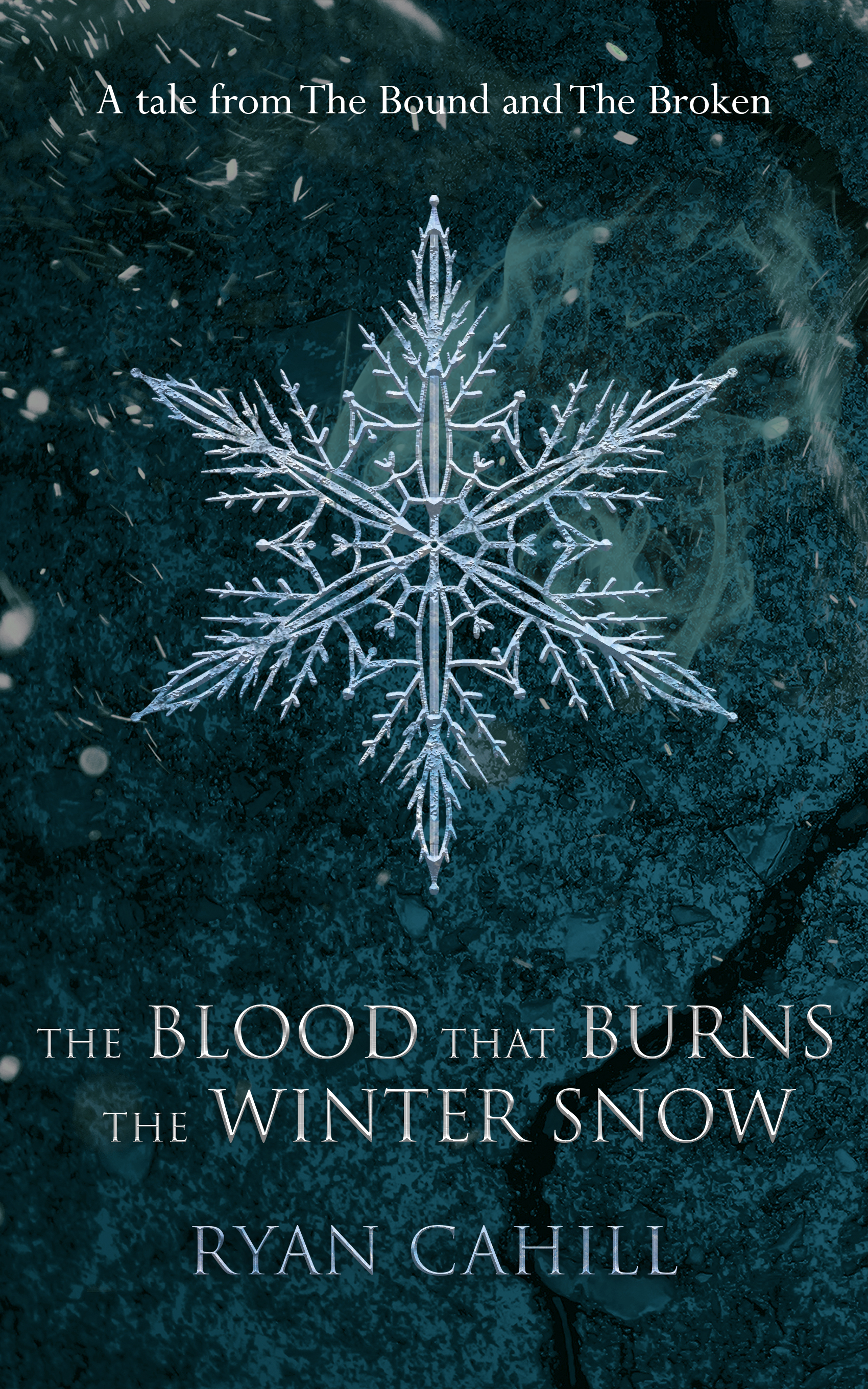
Stay with me – this is actually a review for the Blood that Burns the Winter Snow!
My name is Matthew, and I’m a chocoholic. I eat chocolate almost everyday and can easily deal to a Whittakers Creamy Milk Generous Block in a sitting. Sometimes, however, indulging in chocolatey gluttony is just not possible. Sometimes (like when I’m sitting at my desk at work at 3pm) you can only indulge in a sneaky chocolate hit to take the edge off the day. For those times I have a stack of mini-sized bars in my top drawer. That 3pm hit isn’t as satisfying as a full on choccy binge, but it’s tasty and sweet and it keeps me going through that moving-through-molasses slow part of the day.
The Blood that Burns the Winter Snow is a mini-sized “The Bound and the Broken” fix that, while it won’t give you that volume 4 full sized book that you’re definitely craving if you’ve read the rest of the series, is tasty and sweet and will remind you about everything you love about Ryan Cahill’s writing.
While waiting for the next volumes of my favourite series (this one, Stormlight, Dresden, Will of the Many etc) I’ve been reading a lot of self-published LitRPG and Progression Fantasy. There’s a lot fun stuff out there and it keeps me going but within the first page, this story smacked me in the face with the difference between fast food and fine dining (so many food analogies! I must be hungry!)
If you haven’t read the series before (and if you haven’t you’re really missing out) you could still read this first as a prologue that is great representation of what you can expect from the series. Relatable characters, visceral action, beautiful writing while just hinting at the wonderfully realised world that the story inhabits.
The shadowy backstory of Calen’s dad, Vars is one of the biggest mysteries of the series, and this short story casts just enough light to intensify our desire to know more and I’m just crossing my fingers that Ryan gives us more of this in the future.
It’s very short (I read it during an afternoon tea break at work), but very good.
My name is Matthew, and I’m a Cahill-olic
(In the interests of full disclosure I should add that I am an Advance Reader for this series and received an early copy of the story. For me this is like having a connection in the chocolate factory who lets me try the new flavours before everyone else!)
Like Crack for Lit RPG/Progression (any every other type of) Fantasy Fans
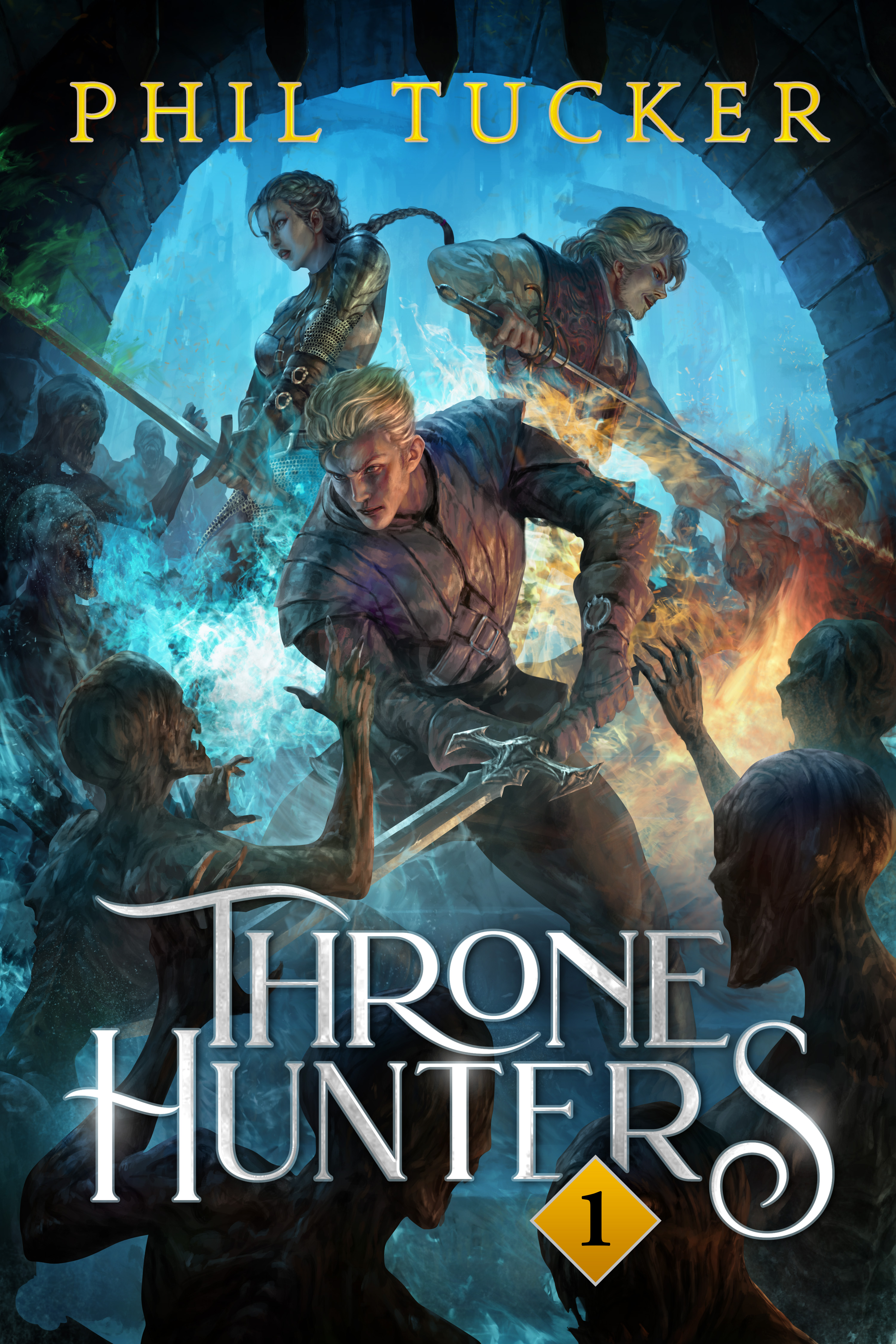
In a time where it seems like every fantasy series has to be a Super Mega Uber Epic, sometimes it’s great to read a tightly woven tale with a small cast of (extremely compelling) characters in a setting that is constrained to their (extremely well realised) immediate surroundings. Throne Hunters is essentially the weak to strong progression arc of a hugely likable (if flawed) main character and his also hugely likable (but very flawed) friends, set (so far) in a single city and dungeon. All of these elements could be very cliche but it’s Phil Tucker so (as always) he finds new and suprising approaches to familiar tropes.
If you’ve never read Lit RPG or Progression Fantasy before, fear not! This is just a great fantasy story and the stat sheets and levelling up that are part and parcel of the sub-genre are done very organically and with a light touch. I’d say that it’s an awesome introduction to this type of book but be warned that it’s much better than most of the other Lit RPG out there so you should temper your expectations if you choose to look for something in the same genre.
I originally read this on Royal Road and the serialised format (and accompanying wait for each new chapter) caused me to describe it to someone as being like crack for Progression/Lit RPG Fantasy fans – so desperate was I for each new installment. This version has been revised and edited for better pacing in novel form and, if anything, it’s just concentrated all of that serial goodness into an even more satisfying package.
I’ve read almost everything Tucker has published and have never had a bad time but this one has really hit the spot for me personally. The (strongly recommended) Immortal Great Souls series is his best but Throne Hunters may actually be my favourite.
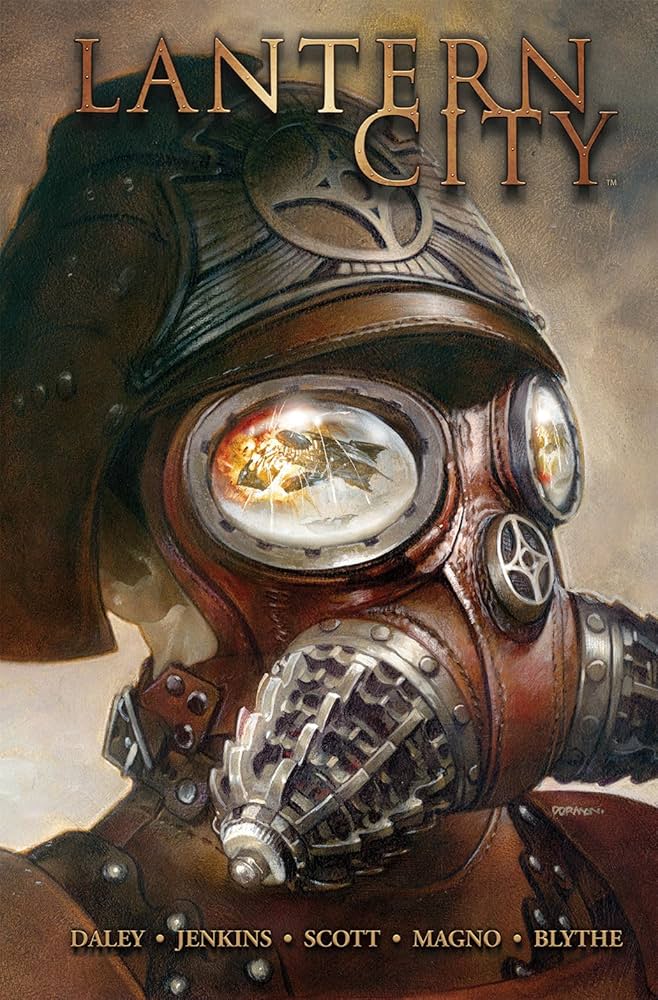
Some months ago I was occupying the new release station of my regular circuit around our favourite emporium of amusing board games and comical delights – when a cover tugged at the corner of my eye and politely requested the pleasure of its attention. “Lantern City” it said to my eye and my eye (joined by the other one – I actually have two) found its painted cover (featuring what appeared to be a Steampunk fireman in dynamic pose) to be most aesthetically pleasing. I also noticed the appellation of the esteemed Paul Jenkins’ name on the title credits which further encouraged a more thorough examination (Mr Jenkins is an author of graphic literature who has very seldom failed to provide fantastical enjoyment – in the humble opinion and experience of this writer).
Hmmm…so maybe writing this preamble in faux Victorian style was one of those ideas that seemed so much better in my head than on my keyboard, but having set the scene the it’s fair to say that the combination of the catchy cover, Paul Jenkins, and my soft spot for the Steampunk genre (dating back to Joe Kelly and Chris Bachalo’s noughties beautiful, captivating, and utterly incomprehensible comic series of the same name) was enough to get me to give Lantern City a quick flick through (plus the fact that it’s an Archaia published title – if you’ve read any of my reviews you’ll know what my opinion is of those guys!). I was immediately blown away by the amazing art of Carlos Magno. Honestly, this dude is freakin awesome! His hyper-detailed rendering of Lantern City and its citizens is worth the price of admission by itself.
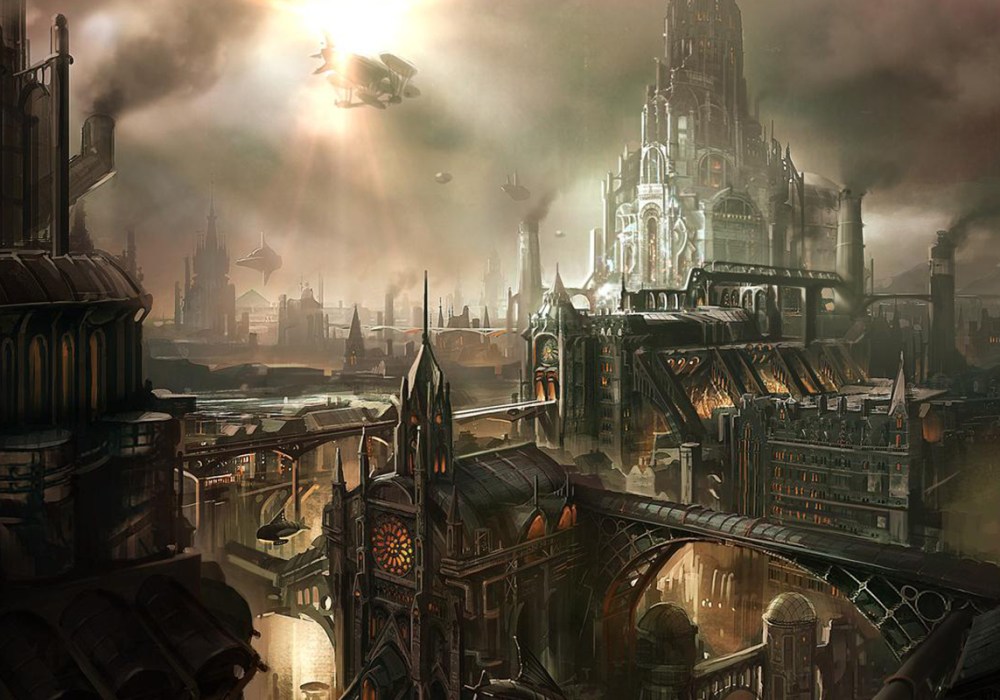
Lantern City is the sprawling steampunk setting for the tale of Sander Jorve, a poor member of the city’s lower class who is struggling to provide for his wife and son. The city presided over by the Grey dynasty and their harsh rule is enforced with extreme prejudice by the Guard (the aforementioned steampunk fireman looking guys). When a chain of circumstances puts Sander in the impossible position of having to assume the identity of a murdered Guard Captain, Very Dramatic Stuff and constant stress and jeopardy ensue.
Main series writer, Matthew Daley and his 1st issue co-writer Jenkins manage to introduce and create sympathy for the main characters within a few pages and quickly set up an intriguing dilemma with a cliffhanger ending and before I knew it, my casual leaf through had turned into a full reading of the whole issue (which I still bought, just in case anyone was wondering).
This led to a seriously fun ride through the full 12 issue run of Lantern City (now available in Hard Cover right here at Mark 1). There’s some amazingly detailed world building here coupled with an engaging story with many unexpected twists and turns. A googleoogle led to the discovery that the setting and series was the brainchild of Trevor Crafts (in conjunction with Babylon 5/Tron actor Bruce Boxleitner) and the comic is just one spoke in a multi-media wheel that includes a novel (‘Rise’), a planned television series, and gaming projects.
Interested to find out more about the genesis and future plans for this setting and its denizens, I contacted Trevor and Matthew to request an interview. I’d like to thank both of them and Ellen Scherer- Crafts (VP Production & Development, Macrocosm Entertainment) for their time and generosity in making this happen. For more information check out: https://lanterncitytv.com/
Trevor Crafts
How would you describe Lantern City to someone who has never read the comic or novel?
Imagine a world where knowledge is restricted, ancient grinding technology surrounds you and soot fills the air. You are ruled by the oppressive Grey Empire, but you have one chance to change the world for you and your family. How far are you willing to go to be with the people that you love the most? How much could you change to survive? This is Lantern City®.
I read that you first started developing Lantern City after seeing some steampunk props at a convention – what was it about the steampunk genre that got the wheels turning in your head?
I really saw this amazing imaginative group of people all with their own style and look. The costumes and props that they had designed were amazing. Then I saw the legions of Stormtroopers and I thought, the Steampunk fans needs something like that to rally around.
I’m always interested in how projects progress from the initial kernel of an idea into a fully realized world and story -‐ can you tell me a bit about how the idea started and how that initial conception progressed to what you have now?
I had the first idea on a plane ride from NY to LA. It was the core question of the show that popped into my head: “How far would you be willing to go to be with the person you love the most?” Everything around the series revolves around that question. I wrote furiously on that flight and all of the core characters and the Lantern were born. My vision was very clear and I have tried to use that initial creative spark as my compass for the development of the IP over the last 5 years. Everything is going according to plan, and there have been some wonderful surprises along the way.
How did Bruce Boxleitner become involved with the project and what role has he played?
Bruce and I met in the Old West! Well on the set of a comedy western pilot that I was exec producing called Smokewood, Nevada. We hit it off during filming and I obviously knew his work in epic series and world builds, like Tron and Babylon 5. I wanted someone with a strong SciFi background to join the team. So I shared the concept with him and all of the development I had done and we started honing the core story together. Bruce is a co-‐creator and co-‐executive producer of the show.
At what point did Matthew come on board and how has he helped flesh out your ideas?
I had been producing a few other projects and one of my DPs Larry Langton introduced me to his college roommate Matt Daley. We hit it off immediately, and over the years we collaborated on a few projects together and always snuck in some time to chat about movies and TV shows. When the opportunity came up to work together it was a no brainer. Matt’s brain works in different ways than normal humans. He can’t stop coming up with characters and stories, He is one of the key reasons Lantern City is the sprawling steampunk mega-‐metropolis that it is!
How interactive is the development process between the 3 of you?
Bruce was instrumental in the beginning, and then Matt helped to build it out big! I’m the guy that makes sure everything stays aligned to the core vision and world.
What level of interaction has there been between the different Lantern City parts? What I mean is, how has Carlos Magno’s (amazing!) art on the comic influenced the design for the TV series and vice versa?
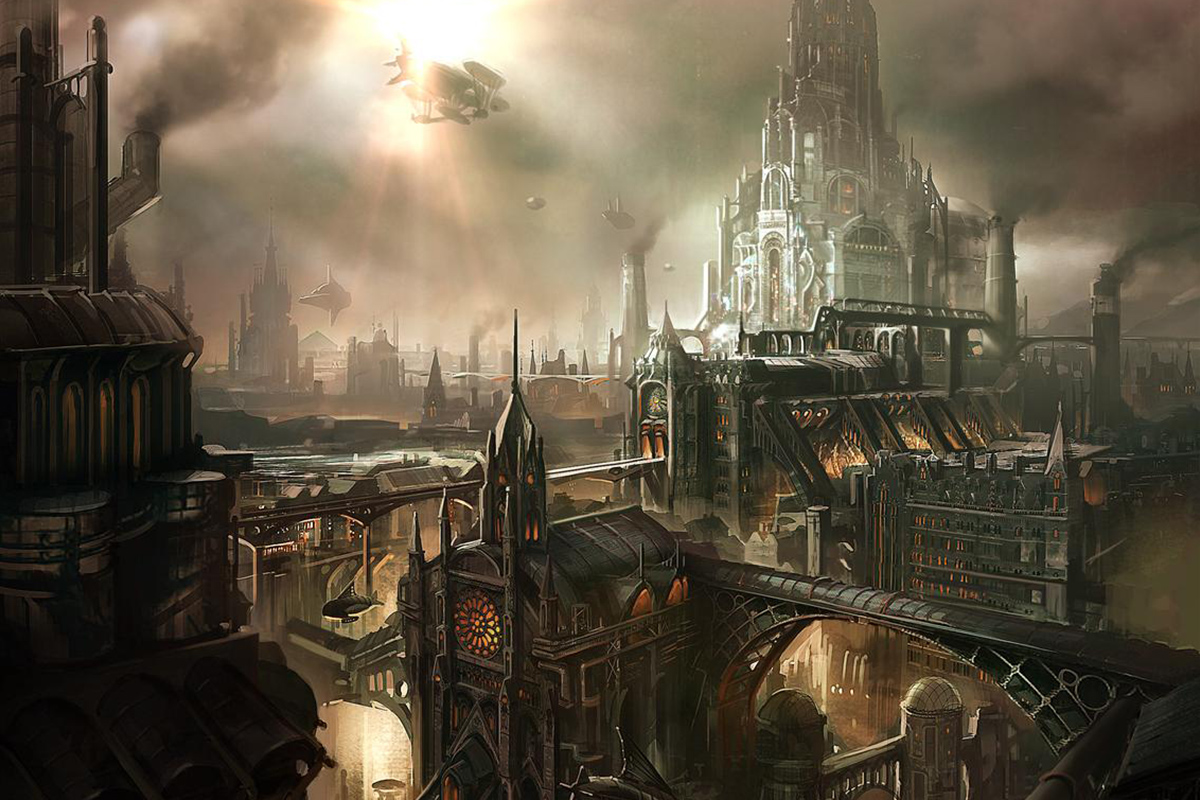
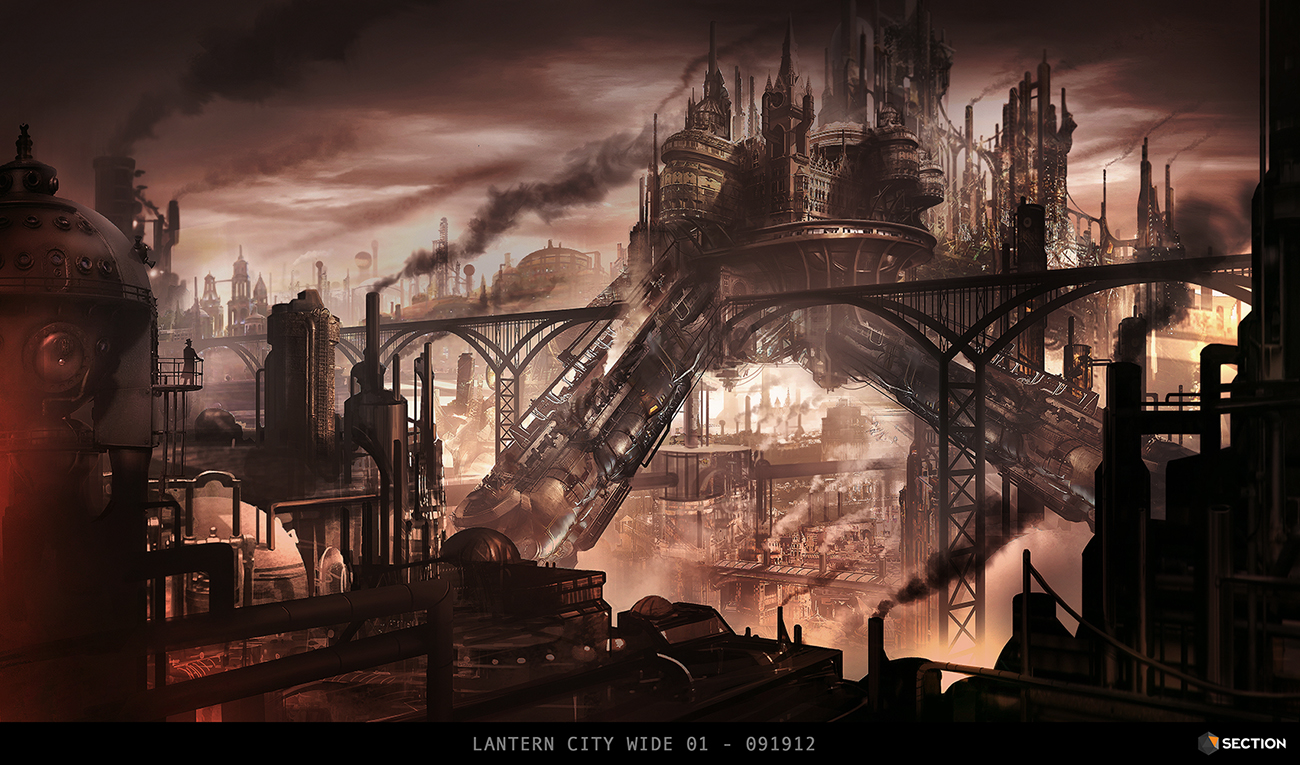
It’s been a truly great process. We had Section Studios create the initial concept art for the series so we gave Carlos a great foundation to build on. But what was awesome and unexpected was how much of a training ground the comic proved to be for the series. With an unlimited special effects budget in comics, we were able to soar to the heights of Lantern City and delve deep into the underground. We could really feel the edges of the space and know what we could and couldn’t do when it came time to start shooting the show. We also developed some great new Characters that will now appear in the show like Lizel, Kendal’s daughter.
You’ve obviously plotted out a fair chunk of the history of Lantern City with Rise dealing with the origins of the Grey dynasty and the comic set many years later – how detailed an outline do you have of the characters and events and over what sort of time period?
We have plotted out the ruling arc of the Grey Empire dynasty, from the Lantern City founder Isaac Foster to Alan Hibbert to James Jay and finally the current young ruler Killian Grey. That’s a lot of history. We have played a bit in each generation of the Empire and I think there is an enormous trove of stories and characters in each one. We scratched the surface of the earliest history with Rise, and the comic and TV series looks at the current time in Lantern City, but there is a lot in between that can be explored.
Is the TV series set in the same time period as the comic or is it in the earlier period described in ‘Rise’ (or something in between)?
The TV series is set shortly after the events of the comic series. Sander has been leading the underground for some time, and Kendal is back trying hard to push peaceful revolution, and Killian is still ruling the city with an iron fist, but the story really twists when 3 outsiders from our world fall into the center of the city with no way to get home. It’s a great juxtaposition to see how they deal with this very alien environment and how they change to survive.
What is the current status of the TV series? Is it still going ahead or is it in development hell?
We have just rewritten the pilot and got some good news recently, so things are moving along nicely.
What’s next for Lantern City? More comics? Novels? TV? Games?
How about all of the above! We have created a great maquette of the Lantern City guard that will be available very shortly, and we have been in development on an Augmented Reality board game as well. There are thousands of stories to tell about Lantern City and Matt Daley just won’t stop writing! We have been working on a short story compellation as well called Tales of Lantern City.
Was it always the intention to tell stories across multiple media? What was the thinking behind that decision?
What I love more than anything else is building worlds. With a place as big as Lantern City, that has so many characters and corners of the city that we haven’t even seen yet, we have an amazing opportunity to utilize not only different media, but different storytelling styles. You can’t tell every aspect of the story in a 1-‐hour show or an issue of a comic, but with multiple formats we have that option. It’s very important for us, that every story we tell is additive. We don’t want anyone to do any homework to enjoy Lantern City. You can pick up Rise, or watch the show or read the comic or
play the game and enjoy them on their own, but the power comes in when they are combined to see a real 360 degree view of the amazing Lantern City.
Matthew Daley
How did you first become involved in Lantern City?
I became involved in Lantern City back in the spring of 2012. Trevor and Bruce were looking for a reliable writer that understood the world they were building and had a love of genres. It was a natural fit from the beginning.
What appealed to you about the project?
There were a number of things that appealed to me about the project. First off, I knew immediately that Lantern City was going to be an enormous canvas and if I were a painter I’d be a muralist! I love that it has an historical feel to it. I studied History as an undergraduate student and loved the opportunity to create a fictional world with a deep sense of history. I was excited to develop characters to inhabit this world. All of the bells and whistles of world building are useless if you don’t populate that world with interesting characters. I liked being able to incorporate interesting socio- political elements into the world without ever reaching the level of preaching or teaching; there are realities to this world that contemporary readers will recognize as parallels to our world. Finally, I liked the idea that this was going to live in different mediums. I like working in multiple mediums and it’s always a pleasure to work different muscles in creating something that fits well for television vs. comic books vs. traditional novels and so on. This project would afford such an opportunity.
Are you pretty much able to go in any direction the story takes you or is there a project ‘bible’ or timeline already developed that you need to stick to?
There is flexibility within this world, though there are rules and a history that must be respected. We’ve worked on a project bible since the beginning and while it has changed somewhat, the core is the same. An important thing to keep in mind while creating a world is to have rules that you stick to but that you aren’t restricted by those rules. That might sound contradictory, so I’ll use an example. George R. R. Martin has created a world in Game of Thrones where “nobody is safe” (i.e. any character can die). This means that readers/viewers are always on edge and there cannot be favorites. For him, he had to decide this from the first book and stick with it, meaning Ned Stark had to die, even though most series would follow his journey.
Carlos Magno’s art is incredible – how did you guys find him?
Carlos worked on two previous BOOM! Studios’ series and Trevor and I both loved his work. His level of detail is second-to-none. We made a wish list of artists to work with, which included Carlos, and fortunately for us, he was available. The series wouldn’t be the same without him.
Paul Jenkins was credited as co-‐author on the first issue of the comic but not on any of the subsequent ones – was he always just going to be on board for the first or did something happen?
Since I had no previous comic book writing experience, it was determined from the get-go that I would co-author the first issue. Paul came on board and was incredible to work with. Essentially, he taught me how to write comics. He had an opportunity to write a different series and had to take it.
Had you written any comics previously?
No, though years ago I used to submit story ideas to both Marvel and DC when they had open submissions. I was naïve, for sure! I should have sought out artists and developed my own projects, but life is all about learning from mistakes.
What do you enjoy most about writing for comics vs writing for other media?
I love being forced to be economical. Most readers are drawn to the story and the art (though they’ll lean more toward the art) and a writer must put his/her ego in check because there’s a good chance someone cares less about your words than they do the artist’s work. A writer does have a great responsibility though, in shaping the story and developing the characters and making sure readers feel like they’ve gotten their money’s worth. Writing for comics is akin to writing/directing a film. You’re crafting the story and helping to determine the visual language of the story.
Writing comic books is also highly collaborative, whereas other creative arts don’t always lend themselves to such collaboration. It’s a true team effort and constantly rewarding.
Is your involvement in the project primarily around the comic books (and the Rise novel) or are you actively involved in the other aspects as well?
I am and have always been involved in all aspects of the project. It’s been an incredible journey and it’s important for me to contribute when necessary and step aside when need be.
Will there be further Lantern City comics?
There are many unexplored phenomena in Lantern City…while there are no guarantees, there is no shortage of material.
Is there a particular character or part of the Lantern City world you’re most excited to develop further?
There is mention in Rise and the 12-part comic book series of The Last War, which was a sprawling war that nearly destroyed the world in which Lantern City takes place. I would love to write an epic Steampunk war series. That’s a dream series to develop.
As far as characters, I’m excited to incorporate characters from the comic book into other mediums. Most especially, Lizel and Terna. It will be a fun challenge to view the world of Lantern City from a woman’s perspective.
What would you most want people who haven’t read the comic or Rise to know about Lantern City?
That they’re missing out by not having read the comic book series and Rise! And that it is an intriguing world that continues to grow.
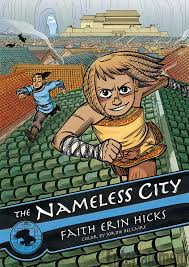
Here’s an interview I did with Faith Erin Hicks in 2016 about her background and specifically her awesome series “The Nameless City”. If you don’t know Faith from her own creator owned titles, you may well know her from her work on the Avatar: the Last Airbender sequel comics. You can find out more about Faith and her work on her website: https://www.faitherinhicks.com/
Kia Ora Faith – thanks heaps for agreeing to do this!
While it’s definitely changing, comics has long been a pretty male dominated field in terms of creators, content, and readership – how did you first become exposed to the medium?
I read comics as a kid. I was big into Tintin and Asterix comics, which are very popular in Canada (less so in the States). I also read newspaper comics, and when the internet finally became a thing, I was big into webcomics.
How did your taste evolve over time in terms of the types of comics you were reading?
I definitely started getting more picky about the kinds of stories I wanted to read. When I was younger I would just read anything in comic form. I remember I had a comic book version of the Bible that I loved. When I hit my late teens/early twenties, I really wanted more mature stories, and I especially wanted stories where girls and women were prominent.
My readers will know because I’ve pointed it out before, but I was quite slow to come to the realization that the comic books I was reading were actually written and drawn by somebody and that there were certain somebodies whose work in enjoyed more than others – at what point did you make that realization and who were some of the creators that stood out to you?
I don’t really remember when I realized there was a person behind the comic book that I was reading. I remember having some knowledge of creators like Lynn Johnson and Bill Watterson. I guess the first creator I really latched on to was Jeff Smith, who created Bone. That was the first narrative comic that I was really into, and I really wanted to draw like him. I even started inking with a brush because Jeff Smith inked with a brush.
When did creating comics become something that you thought you’d like to do yourself?
I started making comics when I was in my late teens, while I was in school. I did a webcomic for fun while I was in college. It was just a hobby, and I never thought I would be a good enough artist to be a professional. I was more interested in animation as a career. (I went to college for animation.)
Did you always draw and write or did one come before the other?
I definitely wrote before I drew. When I was in high school I was huge into prose writing. I had a whole list of ideas that I eventually wanted to turn into novels. I’d always drawn as well, but it was more of the “copy this photo” variety. I didn’t really do cartoon drawings, and I didn’t draw out of my head. I got into that later on, when I started making comics.
At what point did you think you might be able to make a career out of this?
Well, it wasn’t really a choice, initially. I never intended for comics to be my fulltime job, and I remain astonished that I’ve been able to do it for so long. What happened was I was laid off from my job in the Canadian animation industry, and I couldn’t find work anywhere. I had this one freelance job drawing a graphic novel for First Second Books (it was called Brain Camp), and it paid enough money for me to live on for six months. So I decided to work fulltime on this one graphic novel, and at the end of the sixth months, hopefully I could find another job in animation. And that was eight years ago! I managed to get more jobs in comics, and never had to go back to animation. It’s pretty amazing that it worked out. I’m a lot happier in comics than I was in animation.
You started out doing web comics – what are the pros and cons of working on something more episodic like a webcomic vs something more long form like Nameless City?
Working on a GN like Nameless City can be very isolating. It’s just me and my editor working on this giant project, and we had no idea if it would actually resonate with readers. With webcomics you’re sharing the comic as you work on it, so you have a chance to gauge your readers’ responses as the pages are posted online, which can be really cool. Or it can be awful, if the response isn’t what you hoped for. But I honestly prefer the graphic novel format, and I really like working with publishers. When you’re doing a webcomic, it’s usually just you doing everything, including marketing and publishing if you decide you want a collected hardcopy version of your webcomic. When I work with a publisher like First Second, they do all that stuff for me; all the marketing and distribution and promotion. I like that I can just focus on drawing comics and I don’t really have to do anything else.
Moving on to ‘the Nameless City’ (which is awesome – by the way!)…
What was the original idea that sparked the project? How do these things usually coalesce creatively for you– do you start with the characters or the setting or the situation or all of the above?
The Nameless City had a pretty basic beginning: I wanted to write and draw a story about two kids from the opposite side of a complicated political conflict, and I wanted the setting to be “fantasy.” I wasn’t sure what the world would look like, or whether there would be magic, but I knew it wouldn’t be a realistic setting. I wanted to challenge myself as an artist. I’d just drawn two graphic novels with realistic high school settings (Friend with Boys and Nothing Can Possibly Go Wrong), and I was really sick of drawing school lockers. I wanted a setting that was very different.
How would you describe it to someone who has never read the book?
My elevator pitch is: two kids meet in a City that has been conquered repeatedly. One kid is a member of the ruling elite, the other is a street kid orphaned by conflict. They form a combative friendship and end up entangled in a conspiracy and assassination plot. Or I just say it’s kind of like Avatar: The Last Airbender, but without the magical bending.
The ancient China-esque setting is quite different from the more modern day/school settings of some of your other work – what attracted you to that place and time?
I had read a couple of nonfiction books about the Yuan Dynasty, so it was a time period that interested me. By all accounts it was a complicated time of great upheaval, and some of the historical events mirrored the themes of conquest and occupation that I wanted to explore. I also wanted to stay away from European history inspired fantasy which seems to dominate the genre.
You’ve got this intriguing, incredibly realized setting with cool martial arts and free running but at its heart it’s the story of Kai and Rat and how they develop their friendship – is that the crux of the series or will there be other points of view in the coming volumes.
Kai and Rat’s friendship is definitely the backbone of the comic, although there are different themes and points of view that I explore later on. There are characters whose points of view I think are very sympathetic, but they also make bad decisions with terrible consequences.
Despite them coming from opposite sides of the tracks they seem to share their sense of loneliness and not fitting into their respective worlds – is that kind of the point of the story?
I think Rat fits into her world fine, she’s just suffered under the system she’s forced to live under, because she’s seen as less than human by some of the enforcers of that system. Kai, by contrast has been born with a lot of privilege, but he starts to see the injustices that exist in the system that gives him that privilege. So it’s more about these two coming together to hopefully affect the world they live in.
You do a great job of translating the kinetics of the martial arts and free running scenes into static panels – did you have any particular influences in figuring out your approach or is it just something that came naturally?
Haha, nothing about drawing comes naturally to me! I looked a lot of different comic books and stole from the best. Manga like Fullmetal Alchemist or Naruto do action really well, so those were big influences. There are a couple North American artists who do action and running really well; James Harren is great at that kind of stuff.
There’s obviously some Manga influence in your use of speed lines and some of your facial expressions – where does that come from?
My biggest influence is probably Hiromu Arakawa, who wrote and drew Fullmetal Alchemist. I love her. I also really like Naoki Urasawa, although he’s not known for his action.
I found it interesting that you had cover quotes from Bryan Konietzko (co-creator of Avatar: the last Airbender) and Jeff Smith because the setting of Nameless City and the age of the characters reminded me of the former and there were elements of your art and the vibe of the book that kind of reminded me of Bone – were either of those influences?
Yes, both Avatar and Bone were big influences, and I’m thrilled Jeff and Bryan blurbed the book! They’re both my art heroes and it was wonderful they had kind words for me. I initially pitched Nameless City to my publisher by saying that I wanted to do a comic like Bone. It’s still one of my favourite books of all time.
Although there are martial arts scenes in the book (Mura is pretty bad ass!) – Rat and Kai’s skills are more in their parkour style travel through the Nameless city – was it a conscious choice to have the story’s main heroes have strengths other than fighting? Even with Mura – she’s the most skilled martial artist we encounter in the book which goes against the normal gender stereotypes you’d find in a story with this type of setting – were you deliberately playing with expectations there as well?
Yes, absolutely. It was a very deliberate choice for Kai to be bad at fighting, and for him to be kind of repulsed by the violence in his society. I love action and adventure as a genre, but often times I don’t find it to be very thoughtful about how it portrays violence. I wanted to make an action comic, but have the action come out of characters running and jumping as they explored the City, not hand to hand combat. As for gender stereotypes, it’s always my goal to mess with them, because they’re mostly nonsense. Mura is a character I’ve wanted to write for a long time, and I love where her story goes.
There seems to be potential for things to move in a more fantasy direction as we find out more about the mysterious Northern People/First Builders – will we see more of these elements in the future volumes?
Yes, there are many mysteries about the City that are still to be unraveled. I won’t say any more for fear of spoilers. 😉
Do you plot or script things out in detail before you start drawing or do you write as you go?
I always thumbnail and script the entire book before starting in on a new graphic novel. My editor needs to see my process to give me notes, so it all has to be done before hand. The Nameless City is my eleventh published book, so at this point my method of working is pretty regimented. I sound boring when I actually go through the steps of making a graphic novel, but I feel like planning things out ahead of time and going through the story with your editor will result in a better comic than if you’re just winging it. Although some days I wish I could just wing it …
How do Faith the writer and Faith the artist work together? Does the story ever demand things that as an artist you’d prefer not to draw?
Well, I inked a million rooftops the other day, that was kind of rough. But for the most part, if I’m writing a story that I know I’m going to draw, I pick the kind of story I know I’ll enjoy drawing. So, no comics with a million cars in them. I hate drawing cars.
Without spoiling anything too much, can you give us any hints about where the story is going in the upcoming sequel (the Stone Heart)?
Different forces are pushing the Nameless City down a dangerous road, and Kai and Rat are stuck in the middle, trying to prevent the City from plunging into war. We will also see Kai play a musical instrument, which was super fun to draw.
Thanks so much for agreeing to do this, we love your book here at Mark One and are really looking forward to the rest of the series.

 The Matsignal